
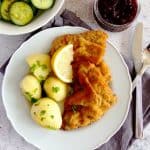
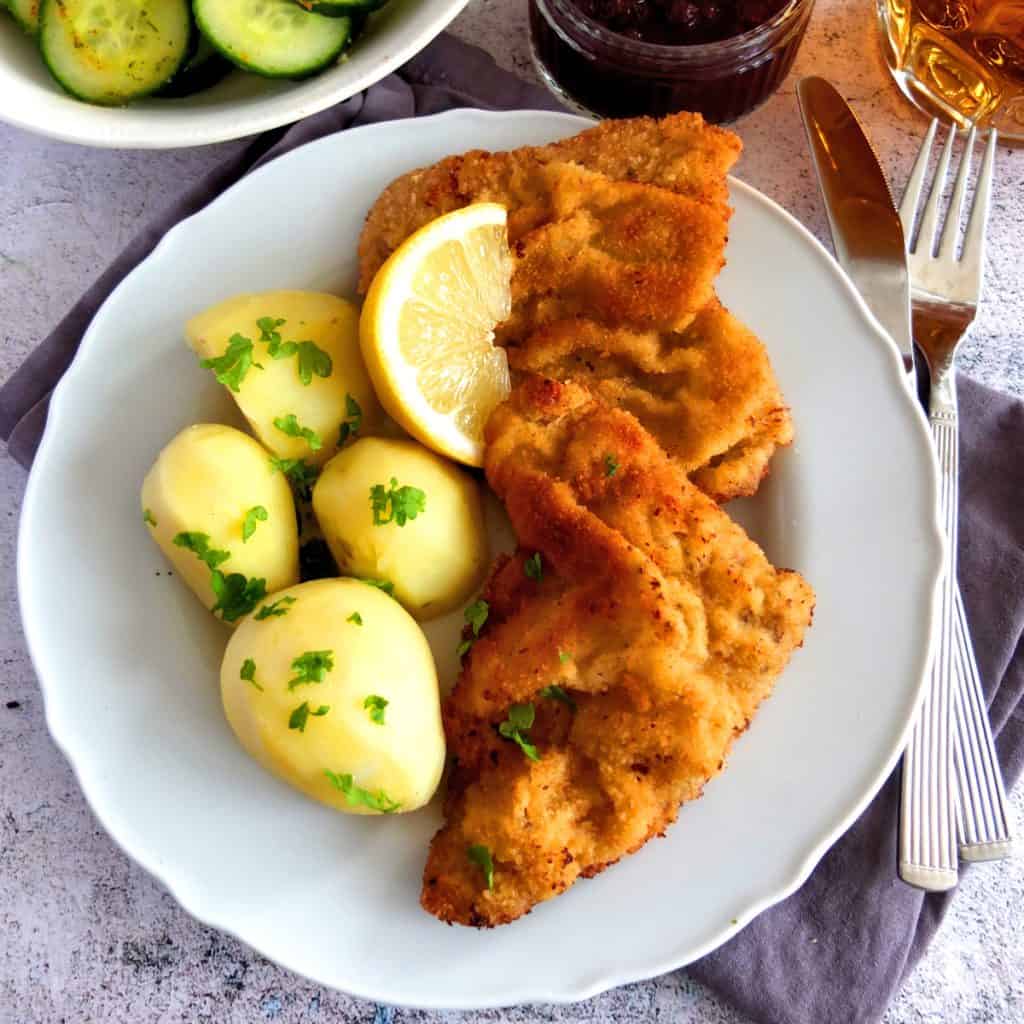
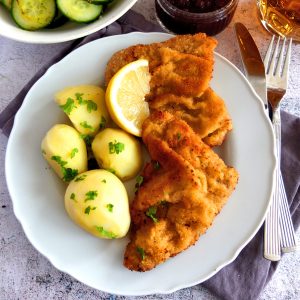
There's schnitzel, and then there's Wiener Schnitzel. It isn't just a piece of breaded veal. It's a little piece of Austria on your plate.
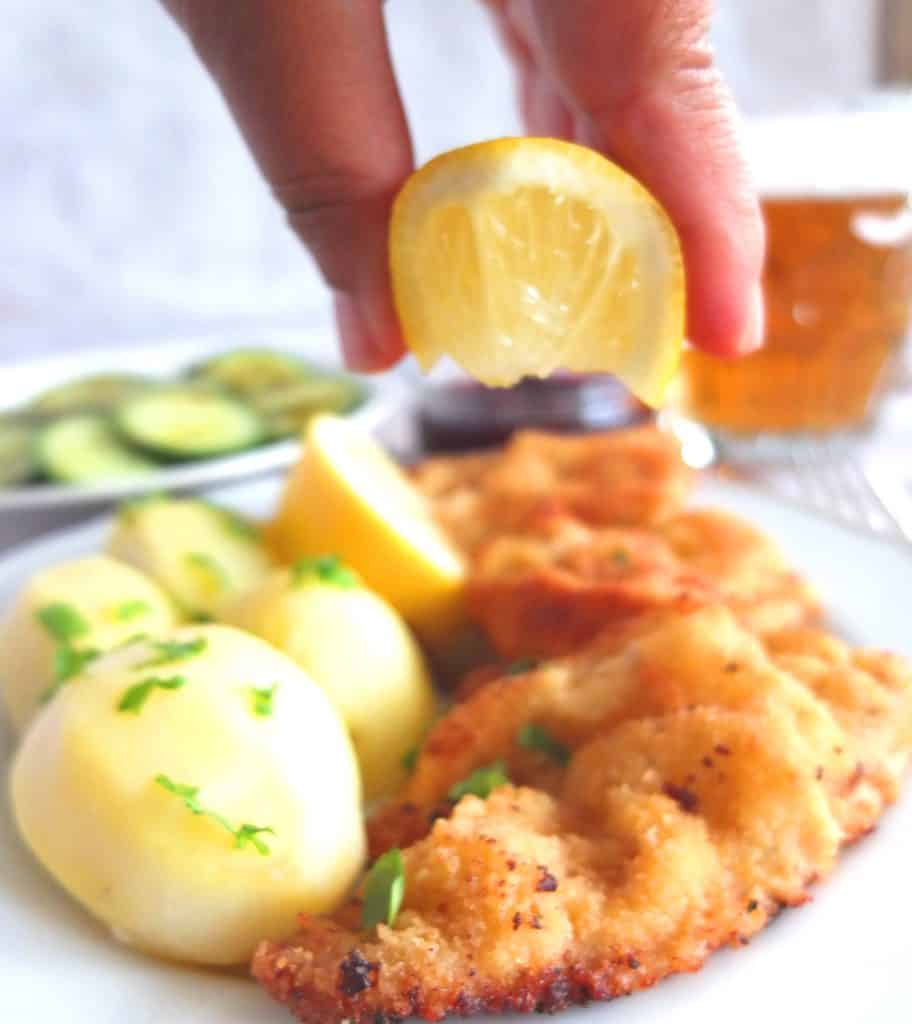
I've ordered it with my eyes closed from just about every German restaurant menu I've ever seen, and it still makes me happy every single time. That crispy, buttery crust, the tender veal, the squeeze of lemon right before the first bite... pure comfort.
By popular demand, this reader-favorite recipe made it into my debut cookbook, German Kitchen-Classic Dishes!
At home, it's our special occasion dinner. Veal for a family of five isn't cheap, but that just makes us savor it even more.
So here's my Wiener Schnitzel recipe to make the real thing at home in 30 minutes, including where to find veal in the US and my trick for that famous wavy crust.
What Is Wiener Schnitzel?
Wiener Schnitzel is one of the most famous dishes from Austria. It is a thin, tenderized veal schnitzel, coated in flour, egg and breadcrumbs and pan-fried until golden. It's named after Austria's capital, Vienna ("Wien" in German), and is traditionally served with a slice of lemon.
The meaning of Wiener Schnitzel is simply 'Viennese Schnitzel.' also called Vienna Schnitzel. English speakers pronounce it "VEE-ner SHNIT-sel."
And no, it has nothing to do with the American hot dog chain Wienerschnitzel!
Is It German or Austrian?
Wiener Schnitzel is Austrian. But it's on almost every restaurant menu in Germany too, which is why so many people think of it as think of it as a German Wiener Schnitzel. Fun fact: in Vienna itself, it's simply called "Kalbsschnitzel" (veal schnitzel), because the Viennese know where their schnitzel comes from.
What About Pork? (Schnitzel Wiener Art)
So what about pork Wiener Schnitzel? Then it becomes Schnitzel Wiener Art, which means "Viennese-style schnitzel." It's breaded and fried exactly the same way, but with a pork cutlet.
It's cheaper, easier to find in US grocery stores, and honestly still delicious. It's what most German families make on a regular weeknight. If you'd like to try it, here's my German Pork Schnitzel recipe.
For this recipe, though, we're going the real, special-occasion route: veal all the way.
Ingredients You'll Need
For the detailed instructions and exact measurements, please jump to the printable recipe card
The beauty of Wiener Schnitzel is how simple it is. You only need veal cutlets, all-purpose flour, eggs, a splash of heavy cream, fine breadcrumbs, butter and vegetable oil for frying, salt, pepper and a fresh lemon to serve. With so few ingredients, each one really counts, so here's what to look for:
- Choose veal from the leg, cut about ¼ inch thick. Ask for cutlets from the top round. In US stores they're often sold as "veal scallopini." If your supermarket doesn't carry veal, try the butcher counter. Most butchers will cut it for you if you ask a day ahead. At home, you'll pound it even thinner, to about ⅛ inch (4 to 5 mm).
- Make your own breadcrumbs for the best results. Fine crumbs cling lightly and puff up beautifully in the pan. For the very best flavor, I grate stale German Brötchen into crumbs. Store-bought plain, fine breadcrumbs work too. Just skip the panko, which is too coarse for that delicate, wavy crust.
- Fry in a mix of butter and vegetable oil. Traditionally, Wiener Schnitzel is fried in Butterschmalz (clarified butter, or ghee if you can find it), which gives it that rich, golden flavor. It can be hard to get outside Germany and Austria, though, so my favorite tip is to use a mix of butter and vegetable oil instead. The oil raises the smoke point so the butter doesn't burn, and you still get all that buttery taste.
- Add a splash of cream to the eggs. It makes the coating extra tender and helps it puff away from the meat. A small step, but you'll taste the difference!
How to Make Wiener Schnitzel
Here's a quick overview. You'll find the exact amounts and full instructions in the recipe card below.
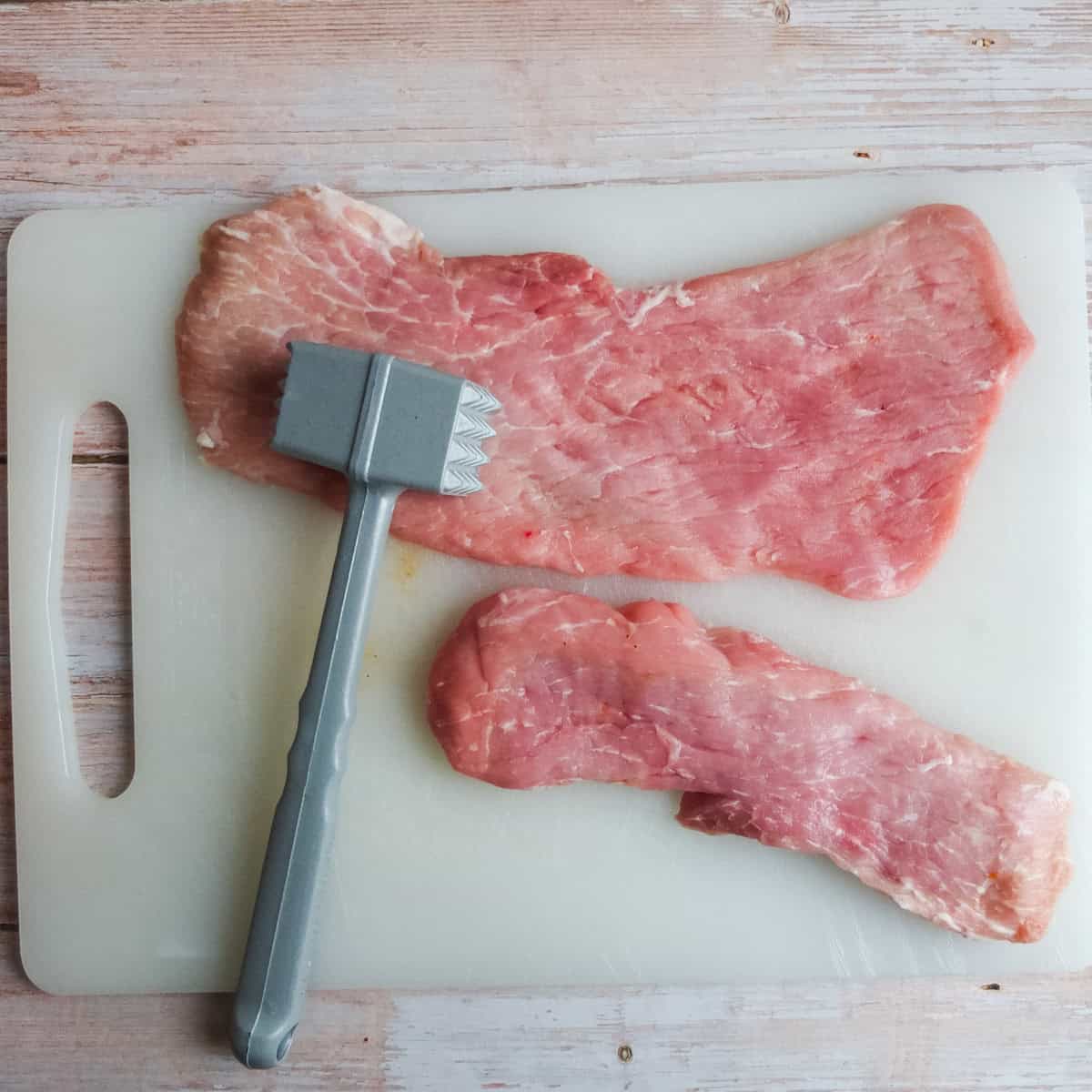
Step 1: Pound the veal thin. Place each cutlet between two sheets of plastic wrap and pound it with a meat mallet (affiliate link) (or a heavy pan) until it's about ⅛ inch thin. Season both sides with salt and pepper.
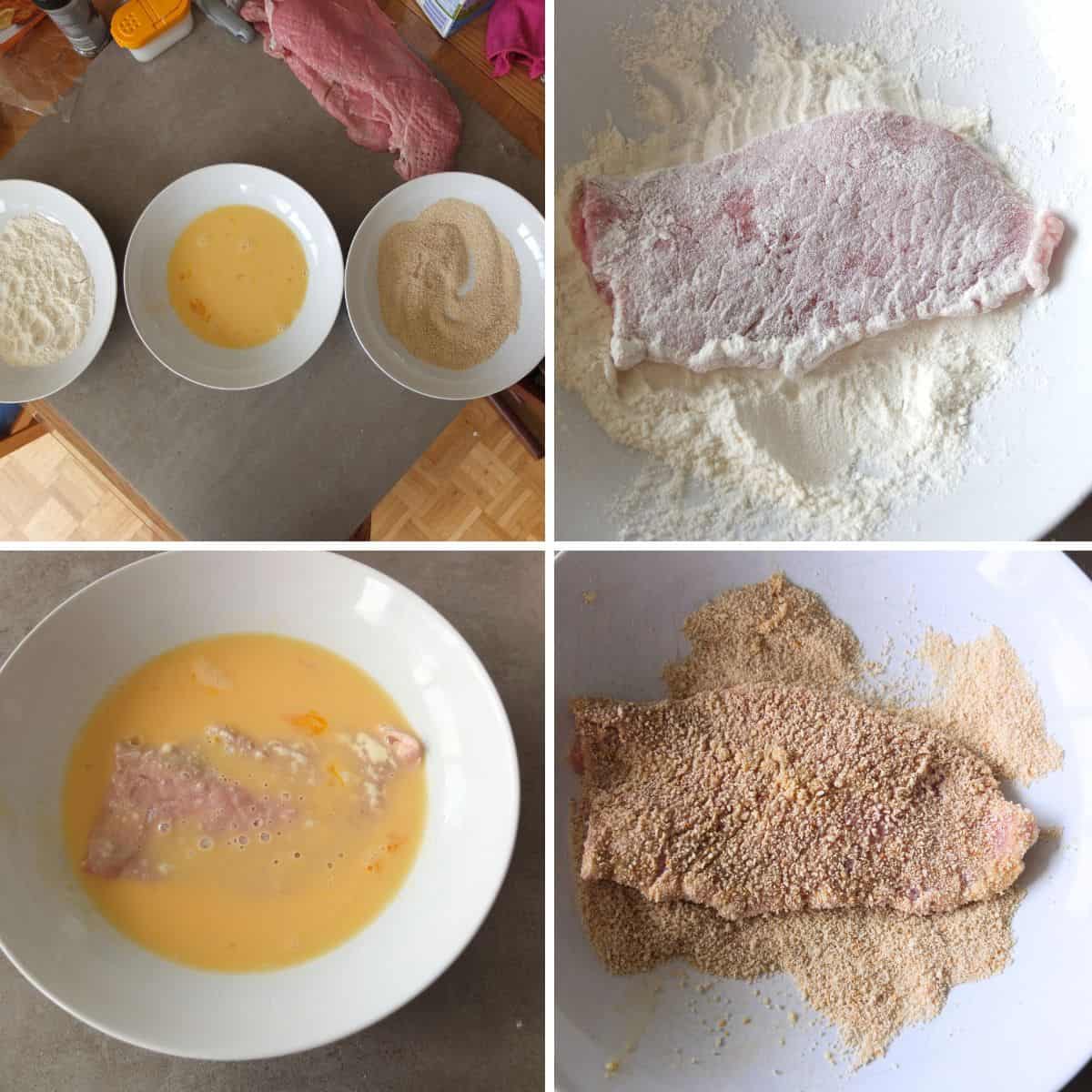
Step 2 Bread it lightly. Set up three plates: flour, eggs whisked with cream, and breadcrumbs. Dip each cutlet in the flour, then the egg, then the crumbs. Don't press the crumbs in! A loose coating is what lets the crust puff up later.
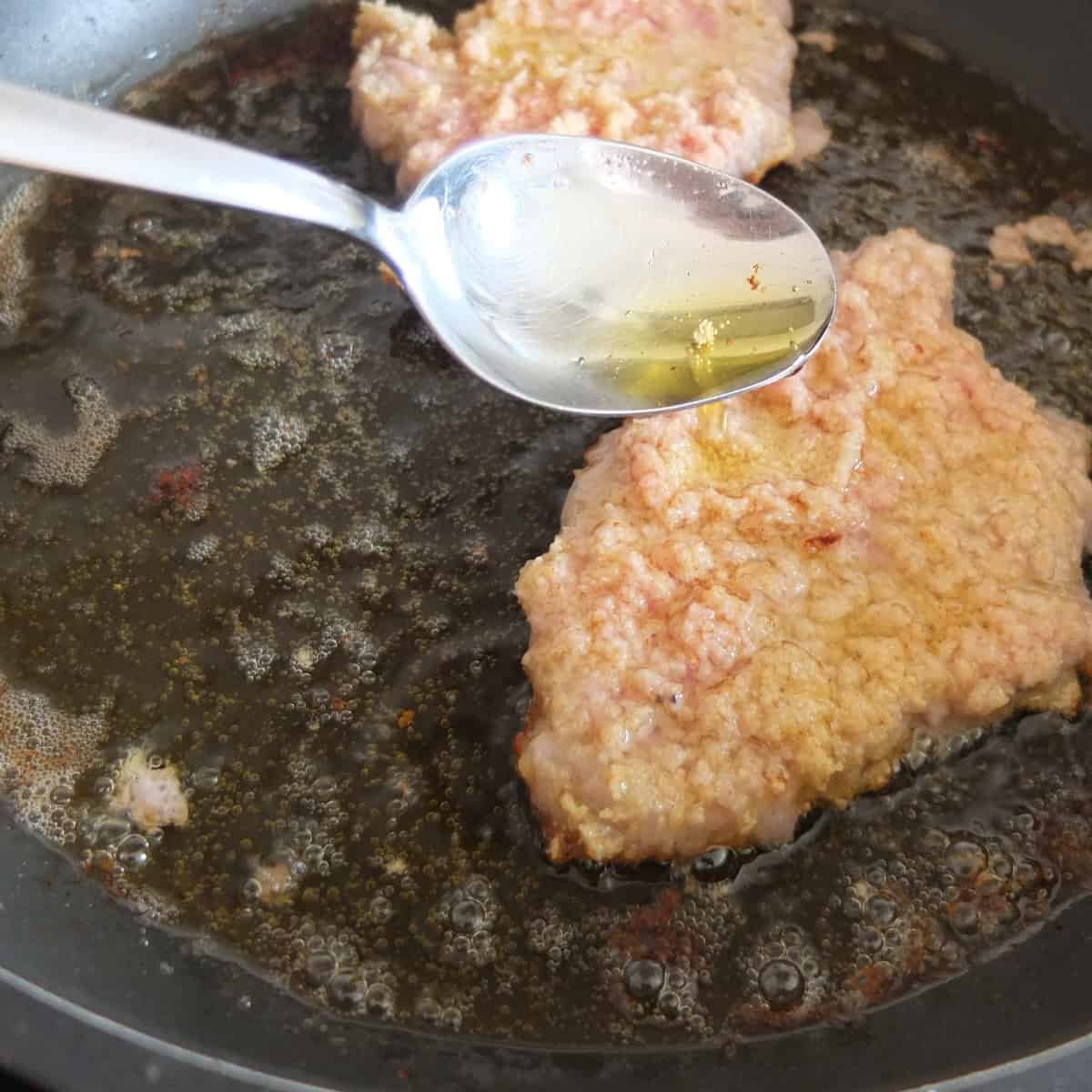
Step 3 Fry and spoon for the waves. Heat about ¼ inch of your butter and oil mix to 340°F. Fry the schnitzel 2 to 3 minutes per side, gently swirling the pan and spooning hot fat over the top. This is what creates that famous wavy, golden crust.
Step 4: Drain and serve right away. Lift the schnitzel onto a wire rack instead of paper towels so the bottom stays crisp. Serve immediately with a lemon wedge.
Substitutions:
- Gluten-free: Swap the flour for cornstarch or a gluten-free all-purpose flour, and use gluten-free breadcrumbs. The crust won't puff quite as much, but it's still lovely and crispy.
- Dairy-free: Simply leave out the cream and fry in vegetable oil only.
- Turkey or chicken: Pounded turkey or chicken breast works well too. Like pork, it can't be called Wiener Schnitzel, but it's a tasty, budget-friendly option. Try my German Turkey Schnitzel.
Want to save this recipe?
My Tips for the Perfect Schnitzel
- Skip regular butter on its own. It burns at high heat. If you want that buttery taste without Butterschmalz, just add 1 tablespoon of butter to your oil.
- Let it "swim" in the fat. Schnitzel is shallow-fried, but you need enough fat for it to float, about ¼ inch deep. This helps it cook evenly without drying out.
- Keep an eye on the temperature. The ideal frying temperature is about 340°F (170°C). It drops as soon as the schnitzel goes in, so if the fat stops bubbling much, turn the heat up a little.
- Shake the pan for that wavy crust. Gently shake the pan while frying so the hot fat washes over the top, or spoon it over with a tablespoon. This loosens the coating from the meat, giving you the light, puffy crust a real Wiener Schnitzel is famous for.
- Pick a neutral oil. Sunflower, vegetable or canola oil work best. Olive oil is fine too, but it will change the flavor.
- Breading falling off? Pat the veal dry with paper towels before you start, and don't skip the flour, because it's what helps the egg stick. Bread the cutlets right before frying, and only flip them once.
- Greasy or soggy crust? The fat probably wasn't hot enough, so the crumbs soaked it up instead of crisping. Fry one or two schnitzels at a time so the pan doesn't cool down, and drain them on a wire rack instead of paper towels.
What to Serve with VEAL SCHNITZEL
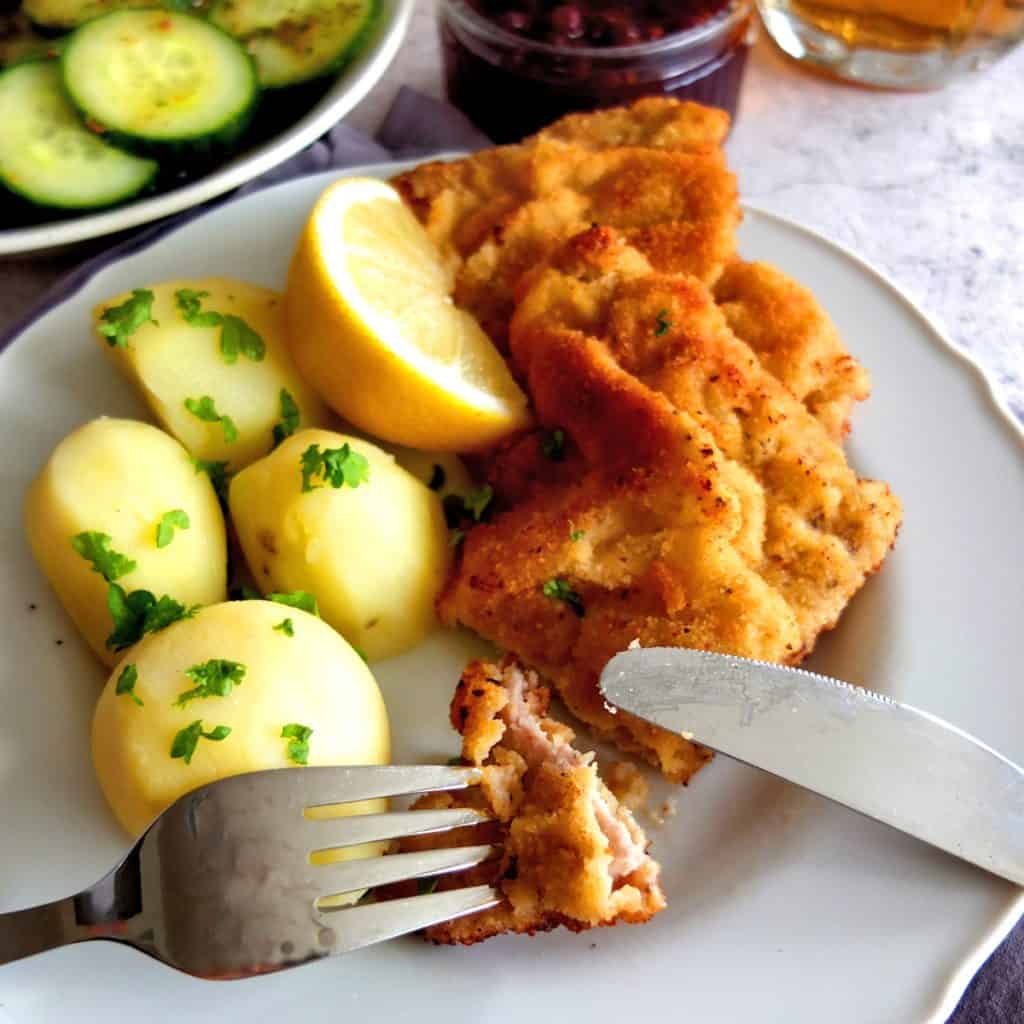
Top Tip: Never skip the lemon! Some say lemon was first served with schnitzel to hide the taste of old frying fat, back in the days before fridges. Today it's all about flavor: the tartness cuts through the rich, buttery crust and makes every bite taste lighter and fresher. Just squeeze it on right before you eat, not earlier, so the crust stays crispy.
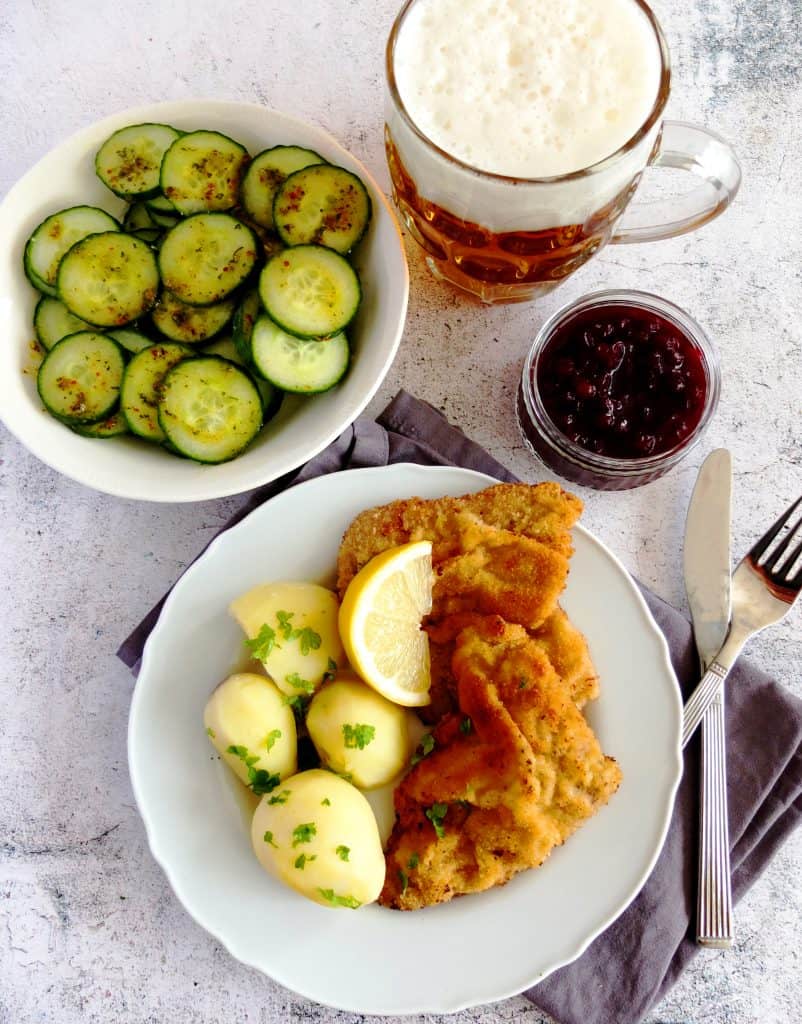
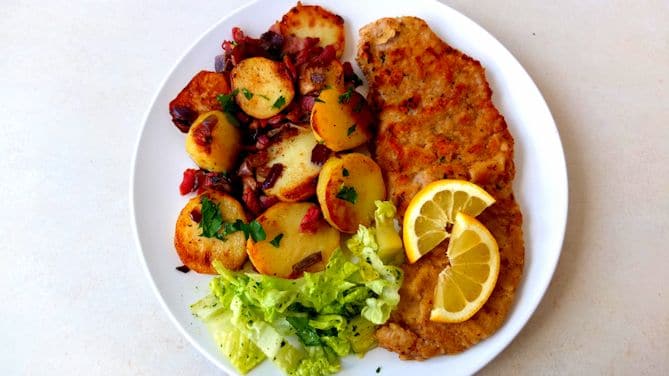
In Vienna, Wiener Schnitzel is usually served with potato salad or parsley potatoes and a dollop of lingonberry jam. In Germany, you'll find it with just about everything! Here are my favorites:
Classic Viennese sides
- Potato salad: the number one pairing. Try my German Potato Salad or, for something cozy, my Warm Potato Salad with Bacon.
- Parsley potatoes: simply boiled potatoes tossed in melted butter and fresh parsley.
- Cucumber salad: light and refreshing next to the rich schnitzel. Go for my tangy Gurkensalat, my Creamy Cucumber Salad or my crunchy Cucumber Radish Salad.
- Lingonberry jam: called Preiselbeeren in German. It's tart and sweet, a bit like cranberry sauce (affiliate link). You can find it at IKEA or online.
German-style sides
- Spätzle: soft, buttery egg noodles.
- Bratkartoffeln: crispy German home fries.
- French fries: a German restaurant favorite, and kids love it!
- Waldorf salad: crunchy apples, celery and walnuts make a fresh contrast to the crispy schnitzel. Try this Waldorf Salad by Bible of Taste.
Is It Served with Sauce?
In Vienna, never! A real Wiener Schnitzel is served with just a squeeze of lemon, so nothing hides that crispy crust. In Germany, though, sauce is very popular. If you'd like to try one, popular sauces for Wiener Schnitzel are a creamy Rahmsauce, a mushroom Jäger Sauce or the fresh herby Frankfurt Green Sauce.
Want more ideas? Check out my full guide to Sauces for Schnitzel.
Storing, Freezing and Reheating
Wiener Schnitzel tastes best fresh out of the pan, but here's how to handle leftovers or get ahead:
- Cooked schnitzel: Store it in an airtight container in the fridge for 2 to 3 days.
- Uncooked breaded schnitzel: Keep it in an airtight container in the fridge overnight and fry it the next day.
- Freezing uncooked meat: You can freeze the plain schnitzel meat in an airtight container for up to three months. Defrost it in the fridge overnight and prepare as usual.
- Freezing cooked schnitzel: You can freeze cooked schnitzel, but the breadcrumb coat will get soggy when defrosted, as it soaks up the water. It won't be as crispy as freshly made schnitzel.
- Reheating: Reheat the schnitzel in the oven at 400°F for about 8 to 10 minutes, or in the air fryer at 375°F for 3 to 4 minutes, until hot and crispy.
The Story Behind the Dish
The legend: According to a popular tale, the Austrians did not invent Wiener Schnitzel but imported it from Milan. It was supposedly discovered by the legendary Field Marshal Joseph von Radetzky, commander of the Austrian army in Italy from 1831 to 1857. There he tried the Italian dish "Costoletta alla Milanese." He brought it back to the Austrian Emperor, who enjoyed it so much he asked his royal cook to make something similar. And this is how the first Wiener Schnitzel was born.
The truth: This story turned out to be the product of an Italian gastronomy guide's imagination, and the legend is only a few decades old. The real origin of Wiener Schnitzel is much older. Breaded meat dishes have been part of Austrian cuisine since the beginning of the 18th century, and recipes for pan-fried breaded veal can be found in cookbooks as early as 1740, long before Radetzky's time. You can't rule out some Italian influence, but breaded meats evolved naturally in Austrian cuisine.
The name "Wiener Schnitzel" actually caught on abroad. In 1864, Napoleon III and his wife ate "Côtelettes de veau à la viennoise" in Paris. (Source: Petra Foede (2009), Wie Bismarck auf den Hering kam)
Wiener Schnitzel vs. Scaloppina alla Milanese: Both are breaded veal cutlets and very similar. However, the Milanese version is made with herbs and Parmesan, whereas Wiener Schnitzel uses only flour, egg and breadcrumbs.
More Austrian Recipes

Have you made this recipe?

I'd love to hear how it turned out! Leave a rating and comment below.
You'll help fellow readers enjoy it too and help me spread the word about German cuisine. - Marita x
Recipe
Authentic Wiener Schnitzel
Equipment
- meat mallet (affiliate link) or heavy pan
- 4 large shallow deep bowles
- frying pan
Ingredients
- 4 veal cutlets / escalopes (about 5 oz / 150 g each). If cut by a butcher, about ¼ inch (5 to 7 mm) thick.
- 2 tablespoon whipping cream (you can substitute it with double/heavy cream)
- 2 medium eggs
- 50 g (½ cup) plain flour
- 150 g (1.5 cups) breadcrumbs
- 200 g (1 cup) clarified butter you can substitute with 200 ml neutral flavored oil such as vegetable, rapeseed or canola oil. If you like you can add 1 tablespoon butter to the oil for a buttery taste.
- salt and pepper to taste
To serve
- 1 lemon sliced
Instructions
- Let's start by tenderizing the meat. Place a veal cutlet between strong plastic sheets (I use a cut-up freezer bag). Using a meat mallet (affiliate link) (affiliate link) or a large heavy pan, pound the meat until it's about ⅛ inch (4 to 5 mm) thin. Repeat with the rest of the cutlets.
- Place the flour, salt and pepper on a large plate. Lightly whisk the eggs with the cream until combined, and pour into a wide shallow bowl. Pour the breadcrumbs onto a third plate. (These three plates lined up, with flour, egg wash and breadcrumbs, are called the "Schnitzel Strasse," or schnitzel street!)
- Lightly coat a veal schnitzel in the flour and shake of the excess.
- Next, dip the veal escalope into the egg mixture. Ensure that your meat is completely coated in egg wash.
- Lastly, turn the schnitzel in the breadcrumbs.
- In a large frying pan, heat the clarified butter or oil over medium heat to about 340°F (170°C). Fry the schnitzel in batches for 2 to 3 minutes on each side. Keep spooning the hot fat over the schnitzel with a spoon. This creates the famous wavy effect.
- Repeat with the other escalopes. Let the schnitzel drip on a paper towel. Serve with a slice of lemon.
Notes
Want to save this recipe?
Nutrition
 Made this recipe?Drop a ⭐ rating and a quick comment below. I personally read and reply to every review!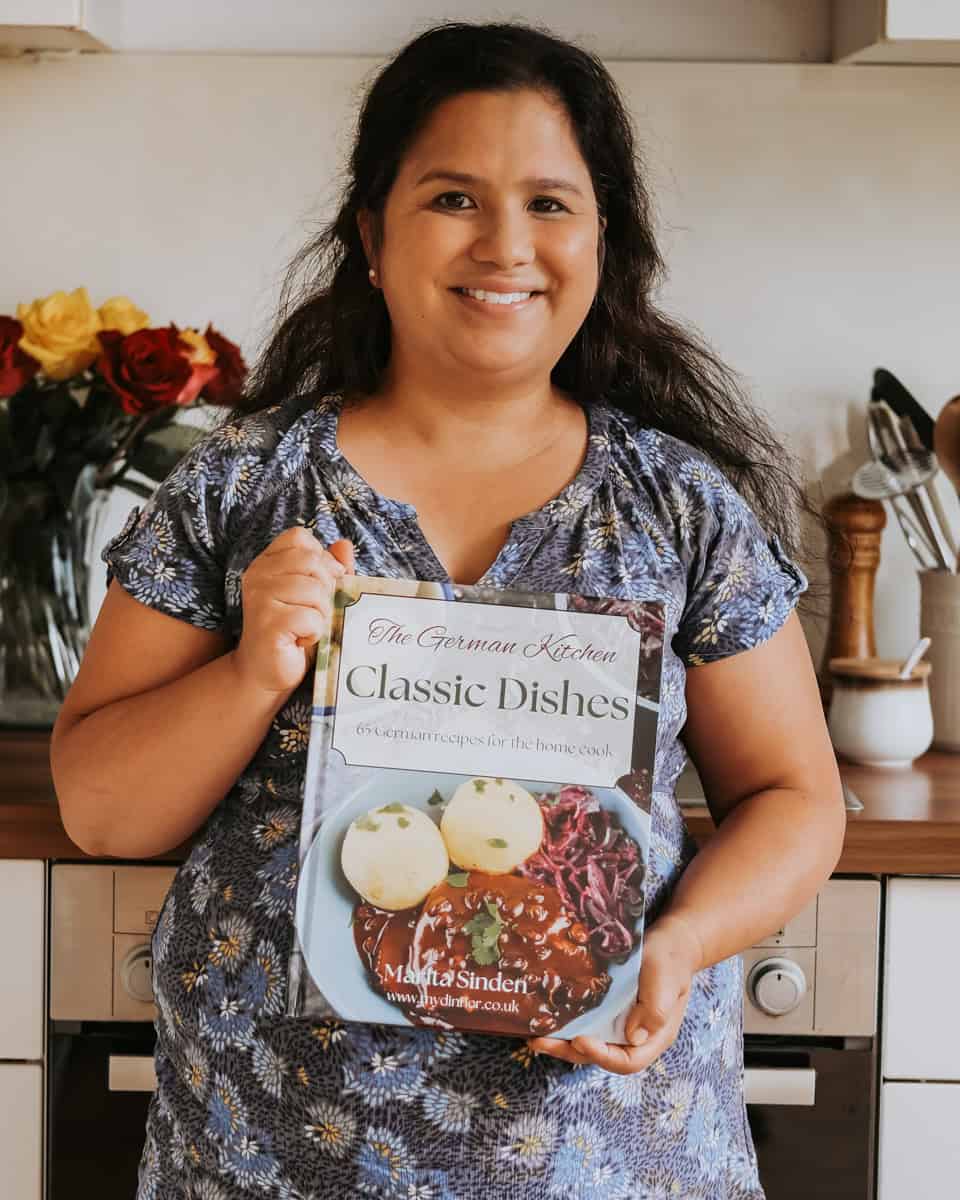
Love this authentic German recipe?
This is one of 65 traditional dishes featured in my cookbook, German Kitchen-Classic Dishes - all tested, perfected, and handpicked by readers like you!

Markus Williamson says
Love it…schmekt gut!!!
Marita Sinden says
Thanky you for your feedback Markus! Glad you enjoyed it.
Peter says
Always better with lemon and eaten hot.
Marita Sinden says
I do agree with that 🙂
Jasmin says
My mother was from Offenbach and she would often make schnitzels. She’d separate the white and the yolk of a hard boiled egg, chop them up finely, sprinkle the whites over the schnitzel, then the yolk, then lay criss cross two salted anchovies over the yolk, with a wedge of lemon on the side. That’s how they served it in our local restaurant called Cosmos in Swiss Cottage, London (sadly now closed down). My mum would also double dip the schnitzels so the breadcrumb coating was thicker, but that’s an acquired taste. My husband hasn’t acquired it!!
Marita Sinden says
Hi Jasmin, there are different ways to make schnitzel, your mum's way sounds very different from my recipe, but I am sure it was still delicious 🙂
Linda Day says
My favorite German restaurant in Texas served this dish with a cooked tomato and onion sauce and a white cheese topping the schnitzel. Would you suggest a particular type of cheese, and would you have a recipe for a tomato-based sauce? This recipe is superb, by the way - thanks.
Marita says
Hi Linda, thanks for your comment. I am unsure what the white cheese could be as I never heard of this variation. I know that in Germany they love using Gouda or Emmental in their recipes. Hope this helps.
Marita
Mihaela|https://theworldisanoyster.com/ says
It is always amazing to see how history and cooking are so interrelated! Fascinating history for this delight, and you just gave me the best idea for tonight's dinner. I haven't had schnitzel in a while; it's time:))
Jeri says
This dish looks amazing! My dad always orders it when he goes out to a restaurant. So when they come to visit in a couple of weeks, I plan on making it for him. Thanks for the recipe!
Marita says
Thanks I hope your dad will enjoy it. Marita
Jean says
It's so nice to learn new recipes around the globe! It looks so good.I visited Austria but havent tried their local food, I missed out that part.
Christie (A Sausage Has Two) says
I am very envious of you two just whipping up your Wiener Schnitzels! And I'm glad you managed to find some veal: I bet Waitress is the only supermarket you'd find it at... but come to think of it, I think they're they only ones I'd trust with it anyway!! 😉
Ginger says
This looks delicious! So glad I could inspire you (although that's not really to my credit, with that dish you don't need to work hard ;-))
Have a lovely week!
Ginger x