

Do you want to make a traditional German cheesecake recipe but struggle because quark is not available where you are? Do not despair! My Käsekuchen recipe can be baked with or without quark-and I promise you it still has the light and airy texture and slightly tangy flavor with a hint of lemon, just like the cheesecakes in Germany.
The secret? A tested German cheese cake recipe with cream cheese and Greek yogurt that creates the same fluffy texture without the specialty ingredient hunt.
This classic German cheesecake has been a favorite at family gatherings for generations and I am excited to share it with you.

Jump to:
What is German cheesecake?
German cheesecake (Käsekuchen, pronounced "KAY-zeh-KOO-khen") is a traditional dessert made with quark cheese, eggs, and sugar baked in a shortcrust pastry base. The name literally translates to "cheese cake" - Käse (cheese) + Kuchen (cake).
Traditional German bakeries also make versions with yeast dough bases, and regional variations include toppings like fresh fruit, raisins, or streusel crumbs.
Quark is a dairy product made from soured milk that is very popular in Germany. It has a consistency that lies somewhere in the middle between cream cheese and yogurt. Quark is used in dips such as quark dip, and spundekäs, and desserts doughs for plum or apricot dumplings.
At the supermarkets you will find Quark in the dairy aisle. It is easy to find in the UK but trickier in the USA and Canada.
United States: Whole Foods, Trader Joe's, Aldi, Wegmans | Online: Brookford Farm, Pleasant Farm Lane
United Kingdom: Tesco, Sainsbury's, Waitrose, Asda, Morrisons
Canada: Mama Earth, Real Canadian Superstore, Farm House Cheeses
Can't find it? Use equal parts Greek yogurt and cream cheese instead!
You can substitute quark by mixing Greek yogurt and cream cheese. I have successfully used it in many doughs, including German cheesecake recipe with quark recipes. The result is a similar texture as quark is firmer than Greek yogurt yet softer than cream cheese.
German Cheesecake vs American Cheesecake
German Käsekuchen and American cheesecake may share a name, but they're completely different desserts. Wondering about the German cheesecake difference? Here's how they compare: Here's how they compare:
| German (Käsekuchen) | American | |
|---|---|---|
| Cheese | Quark | Cream cheese |
| Texture | Light & fluffy | Dense & creamy |
| Crust | Shortcrust pastry | Graham crackers |
| Baking | Direct in oven | Water bath |
| Taste | Tangy, subtle | Sweet, rich |

How to Make Käsekuchen
This authentic Käsekuchen recipe is easier than you think! I'll walk you through each step-from making the shortcrust pastry base to creating that melt-on-your-tongue creamy filling. Before you know it, you'll have a slice (or two!) disappearing fast!
Ingredients:
For the detailed instructions and exact measurements, please jump to the printable recipe card
For the cake base
- flour (Germany type 405, UK plain four, USA all-purpose flour)
- butter (unsalted, at room temperature)
- sugar
- egg (medium size, at room temperature)
- baking powder (affiliate link)
For the cake filling
- Quark (Margerquark) - you can substitute quark with a cream cheese, greek yoghurt mixture.
- sugar
- whipping cream (chilled, and at least 30% fat. You can use heavy cream as well)
- eggs (medium size, at room temperature)
- cornflour/cornstarch (this will stabilize the cheesecake filling)
- vanilla sugar (see how to make homemade vanilla sugar or use 2 teaspoon vanilla extract (affiliate link))
- lemon zest (from untreated lemons)
Käsekuchen Recipe Steps

Step 1: Make the Shortcrust Base
Preheat your oven to 180°C/356°F. Mix butter and sugar until creamy, then add the egg, flour, and baking powder (affiliate link). Divide the dough in half. Roll one half into a rope and press it around the edges of a greased 26cm (10-inch) springform pan to create a 5cm high crust. Press the remaining dough into the bottom of the pan.

Step 2: Prepare the Filling
Whip the cream until stiff peaks form and set aside. Beat the quark (or cream cheese and Greek yogurt), eggs, sugar, vanilla sugar, cornstarch, and lemon zest until smooth and creamy. Gently fold in the whipped cream to keep the filling light and fluffy.

Step 3: Bake with the Secret Cut
Pour the filling into the crust and bake for 30 minutes. Remove from the oven and make a circular incision 1cm from the edge with a sharp knife-this prevents cracking. Return to the oven and bake for another 30 minutes (1 hour total).

Step 4: Cool Slowly
Check doneness with a skewer (it should come out clean). Turn off the oven, crack the door open, and let the cake cool inside for at least 1 hour. This prevents the top from cracking and ensures the filling sets properly.
Delicious Variations
This is a basic recipe, but German-style cheesecakes is wonderfully versatile! Here are popular variations:
Fruit Variations:
- Raisins or sultanas - Fold into the filling before baking
- Fresh seasonal fruit - Apples, cherries, apricots, or blueberries work beautifully
- Mandarin oranges - A classic topping in German bakeries
Special Variations:
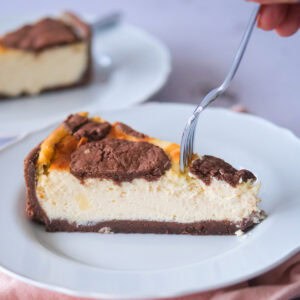
- Russischer Zupfkuchen - Marble the cheesecake with chocolate cake batter for a striking appearance
- Tränchenkuchen - Top with a cloud-like meringue (Baiser) instead of plain
- With pudding powder - Replace cornstarch with vanilla pudding powder for extra stability
Want to save this recipe?

How to stop my cheesecake top from cracking
There is nothing worse than removing your finished baked German cheesecake from the oven only to realise that the top has cracked. Here are some tips to prevent this from happening.
- Use a stabilizer - for this reason, German recipes use vanilla pudding or cornflour to stabilize this cake.
- Pre-empt the cracking by making an incision halfway through the baking time. In theory, you are causing your cake top to crack. But this stops it from cracking rising in the middle. If you make an incision around the edges the cake will drop more evenly and the crack will be hardly noticeable (see pictures).
- Give it enough time to cool down. A large cheesecake can take up 3 hours to cool down. That is why it is important to give your cake enough time. Leave it to cool in the oven with the door open for at least an hour before moving it. This will allow the cake time to adjust to room temperature. Do not cool the cake in the fridge.

Serving Suggestions
In Germany, this cake is served at birthday parties, special occasions, or simply for "Kaffee und Kuchen" time. (Coffee and Cake). I like to decorate my cake in the summer by adding some fresh berries to the top.
The best way to slice the cake is to use a sharp cake knife. Clean the knife after every slice with lukewarm water for a clean cut.
Storage & Shelf Life
Don't worry you can store this baked German cheesecake, once cooled, without any problems for 3-4 days in the fridge. Store the cake in an airtight container.
Can You Freeze Käsekuchen?
Of course, this is my favorite way to store it. You can store it in portions in airtight containers and your slices should stay good for up to three months. Defrost it at room temperature. Cheesecake made with fresh fruit does not freeze well.
More German Cake Recipes:


Have you made this recipe?

I'd love to hear how it turned out! Leave a rating and comment below.
You'll help fellow readers enjoy it too and help me spread the word about German cuisine. - Marita x
Recipe

Authentic German Cheesecake (Käsekuchen) | Quark Optional
Equipment
- hand or stand mixer
Ingredients
For the base
- ½ cup (115 g) butter room temperature
- ½ cups (100 g) sugar
- 2 cups (250 g) flour Germany type 405, UK plain four, USA all-purpose
- 1 teaspoon baking powder
- 1 egg medium size, at room temperature
For the filling
- 2 lb (1,000 g) Quark OR 500 g / 2 cups cream cheese and 500 g / 2 cups Greek yoghurt (10% fat)
- 1 cups (200 g) granulated sugar
- ¾ cups (180 ml) whipping cream
- 5 medium eggs room temperature
- ¼ cups (4 tablespoon) corn starch alternatively, you can use shop-bought or homemade vanilla pudding powder
- 1 teaspoon vanilla extract
- 1 teaspoon grated lemon zest
Instructions
To make the base
- Preheat the oven to 180°C/356°F (top and bottom heat). Line a 26cm (10-inch) round springform pan with parchment paper. Grease the sides with butter and dust with flour-this makes removing the cake much easier later.
- Using a hand mixer or stand mixer, beat the butter and sugar until creamy. Add the egg, flour, and baking powder (affiliate link), and mix until completely combined.
- Transfer the dough to a floured work surface or silicone mat. The shortcrust pastry should come together easily without being overly sticky. Divide the dough in half. Using floured hands, roll one half into a long rope and lay it around the edge of the pan (see step-by-step photos above).
- With your fingers, press the dough up the sides of the pan to create a 5cm (2-inch) high crust around the edges (see photos).

- Roll out the remaining dough and press it into the bottom of the pan, sealing it to the edges to prevent leaks.

To make the filling
- Using a hand mixer or stand mixer with a whisk attachment, whip the cream on medium-high speed until stiff peaks form, about 4-5 minutes. Set aside.¾ cups whipping cream
- Using a hand mixer or stand mixer with a whisk or paddle attachment, beat the quark (or cream cheese and Greek yogurt), eggs, vanilla sugar, cornstarch, lemon zest, and granulated sugar together on medium speed until perfectly smooth and creamy. Scrape down the sides and bottom of the bowl with a rubber spatula as needed.2 lb Quark, 1 cups granulated sugar , 5 medium eggs , 1 tsp vanilla extract (affiliate link), 1 tsp grated lemon zest, ¼ cups corn starch
- Gently fold the whipped cream into the quark mixture until fully combined. Be careful not to deflate the cream-this keeps the filling light and fluffy.
- Pour the filling into the prepared crust and smooth the top with a spatula.
To bake
- Place the cake in the preheated oven and bake for 30 minutes.
- After 30 minutes, remove the cake from the oven. Using a sharp knife, make a circular incision about 1cm from the edge, cutting about 1cm deep. This prevents the center from cracking (see photos above).
- Return the cake to the oven and bake for another 30 minutes (1 hour total baking time).
- Baking time varies by oven. After 1 hour, insert a skewer into the center-if it comes out clean, the cake is done. If not, bake for another 5 minutes and check again.Note: The cake will puff up around the incision. Don't worry-it will deflate as it cools and the cut will become less visible.
- To prevent cracking, turn off the oven and carefully pull the oven rack out slightly, leaving the door open. Let the cake cool in the oven for at least 1 hour before removing.


Video
Notes
Want to save this recipe?
Nutrition
 Made this recipe?Drop a ⭐ rating and a quick comment below. I personally read and reply to every review!
Tracy says
I made Käsekuchen for the first time.
American cheesecake is too sweet and I can’t eat it.
I made the quark 1/2 Greek yogurt, 1/2 Tillamook cream cheese and YUMMY!
I followed the recipe on the shortbread crust and found it amazingly easy to work with. I was worried because people saying it seemed to dry to roll. Their butter must not have been warm enough, because mine rolled out GREAT!
I was afraid to take it out of the pan for the last 30 min, so I just left it in it.
It got a little over browned, but was delicious and did not last long in this house!
Marita Sinden says
Hi Tracy, I love this! Half Greek yogurt and half cream cheese is a great quark swap, and I’m so glad the shortbread crust rolled out well for you. Käsekuchen is much less sweet than American cheesecake, so that’s perfect. Thanks so much for letting me know, and I’m glad it disappeared fast!