
Let me tell you the story of how this Beef Noodle Soup recipe ended up on this blog. We were on holiday in South Tyrol, right on the Austrian-Italian border, and had spent the morning climbing one of the mountains, when the weather turned on us completely. By the time we spotted a little chalet in the distance, the rain had soaked us to the bone. We had no rain gear, were cold, and desperate to get indoors.
Once we were in the chalet, we ordered a bowl of Rindernudelsuppe, a beef broth noodle soup, and just like that, the whole day turned around. It was exactly what a soup like this is supposed to do.
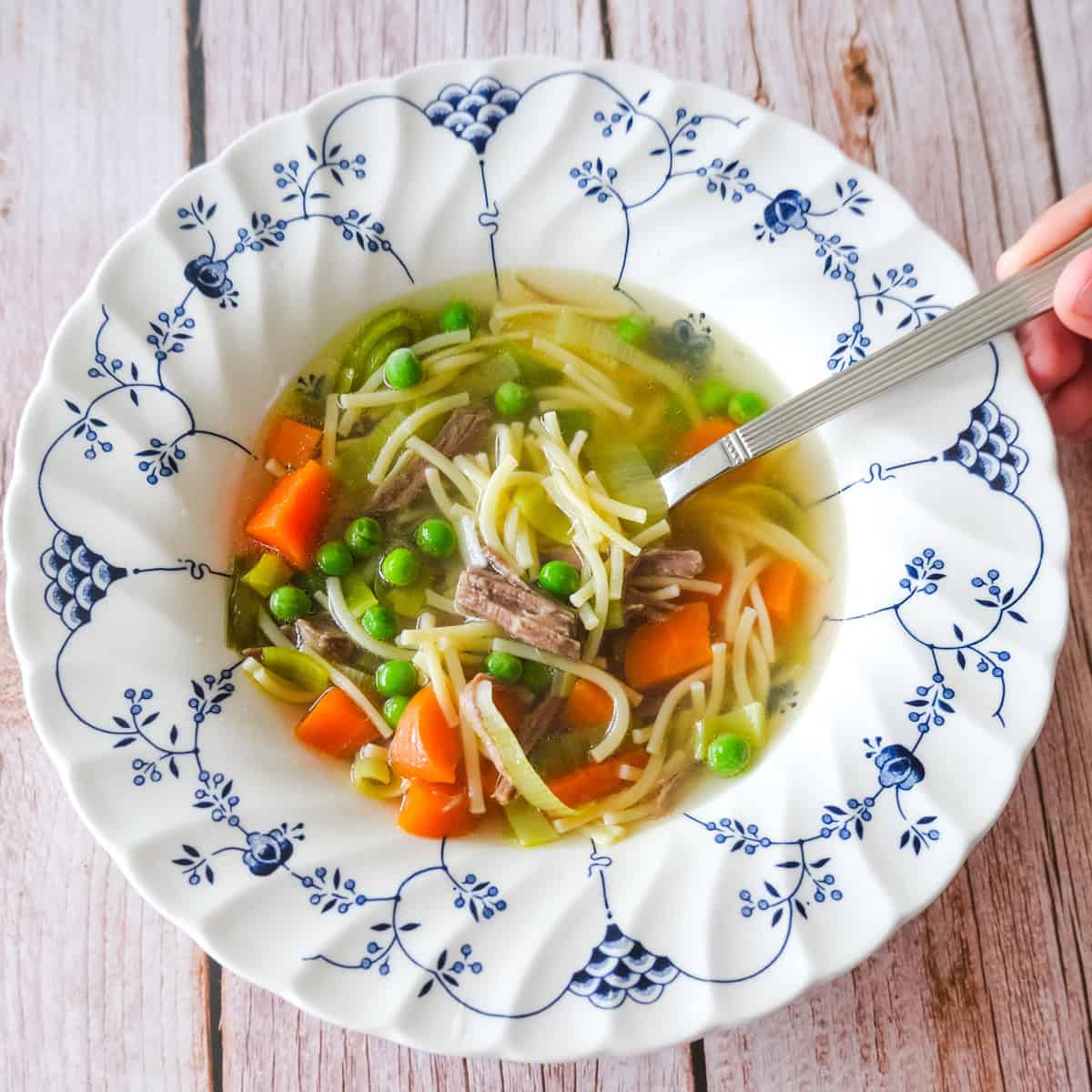
This homemade German Beef Noodle Soup recipe is that bowl. It instantly warms you up when you're feeling under the weather, comforting like a big hug from your best friend. It beats any store-bought soup hands down, and the secret lies in the homemade beef broth. At its heart, this is a vegetable soup with beef broth that has warmed people for generations.
Jump to:
What is Rinderfleischsuppe?
Rinderfleischsuppe is a classic German comfort food. You make it by slow-simmering stewing beef, bones, and Suppengrün (soup greens) in water until you have a clear, golden broth. Rich in protein, collagen, and deeply nourishing, Germans traditionally serve it with fine egg noodles, tender pieces of beef, and sometimes dumplings.
If you love this kind of soup, my German Chicken Noodle Soup is another family favourite worth trying.
Unlike Asian beef noodle soups, which tend to rely on bold spices like star anise, soy sauce, and chili, the German version is far more subtle. Here, bay leaves, peppercorns, and juniper berries (affiliate link) do the are used instead, giving the broth a gentle, delicate warmth rather than a punch of flavour.
Ingredients you'll need:
For the detailed instructions and exact measurements, please jump to the printable recipe card
- The Beef: The heart of this soup is the beef. Stewing beef or chuck is ideal here - it's a tougher cut that breaks down beautifully over a long, slow simmer, giving you tender, pull-apart pieces that soak up all that lovely broth.
- Pro Tip: In Germany, the cut used for this soup is called Suppenfleisch - a long-fibred, well-marbled beef with plenty of connective tissue, typically from the short rib, brisket, or shank. It's slow-simmered to produce a rich, full-bodied broth and sometimes still has the bone in, which adds even more depth. In the US, look for bone-in short ribs, brisket, or chuck. In the UK, beef shin, brisket, or braising steak are your closest equivalents - all work beautifully here.
- The Broth: The broth is everything in a Rinderfleischsuppe. Bay leaves, peppercorns, and juniper berries (affiliate link) give it a gentle, subtle warmth, while carrots, leek, onion, celery root, and fresh parsley build that deep, golden flavour. Starting with cold water and simmering low and slow is the traditional German method - it's what gives you that signature clear colour.
- The Soup Vegetables and Noodles: To assemble the finished soup, fresh carrots, leeks, and peas are cooked directly in the strained broth, keeping their colour and bite. The German soup noodles (affiliate link) (Suppennudeln) are cooked separately and added just before serving. A handful of fresh parsley scattered over the top finishes it off the way it has always been done.
German Soup Noodles
 Buy Now →
 (affiliate link)
How to Make German Beef Noodle Soup
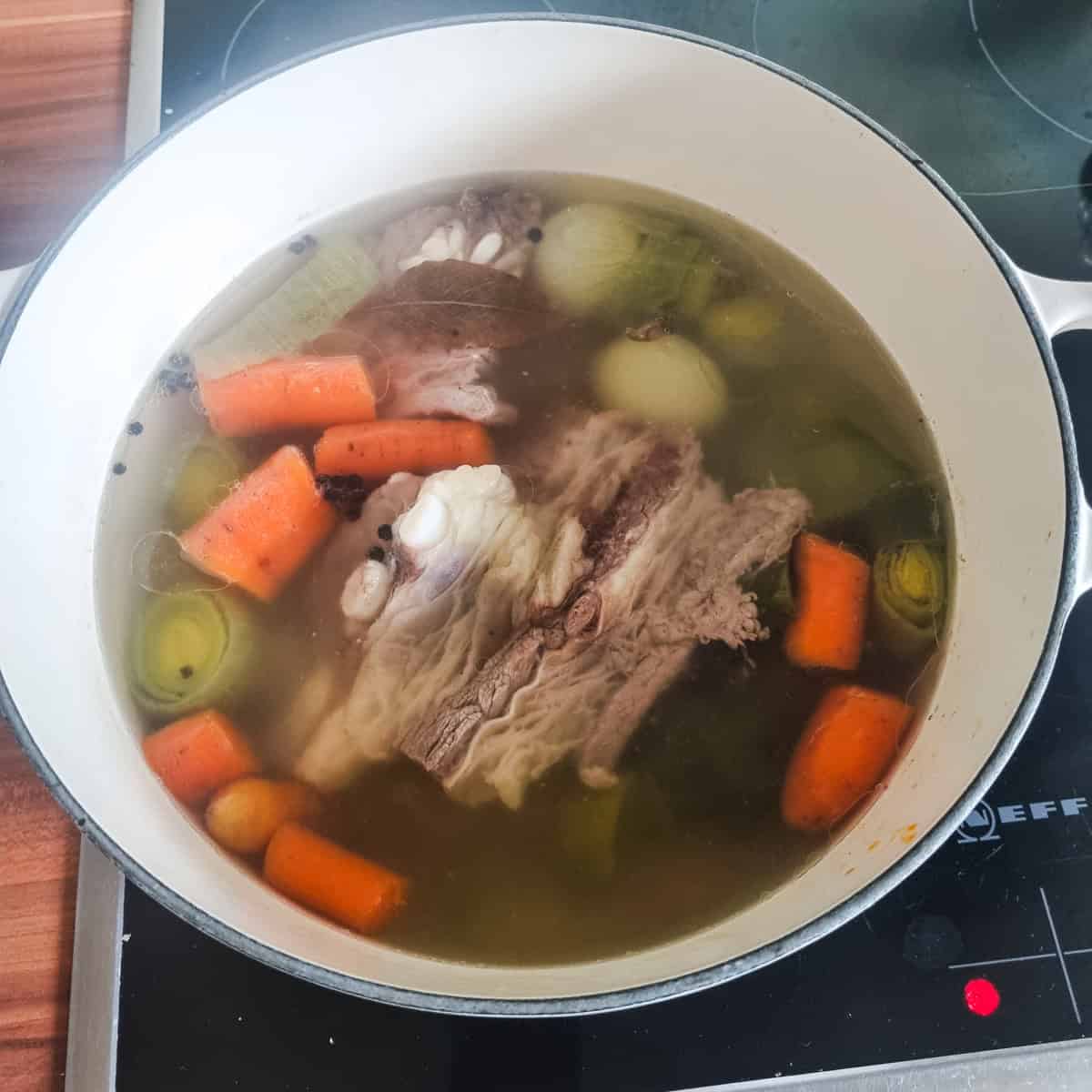
Step 1: Make the broth
Add the beef, soup vegetables, and spices to a large pot, cover with cold water, and bring to a slow simmer. Let it cook low and slow for around 2 hours, skimming off any foam that rises to the surface. The result should be a clear, golden broth.
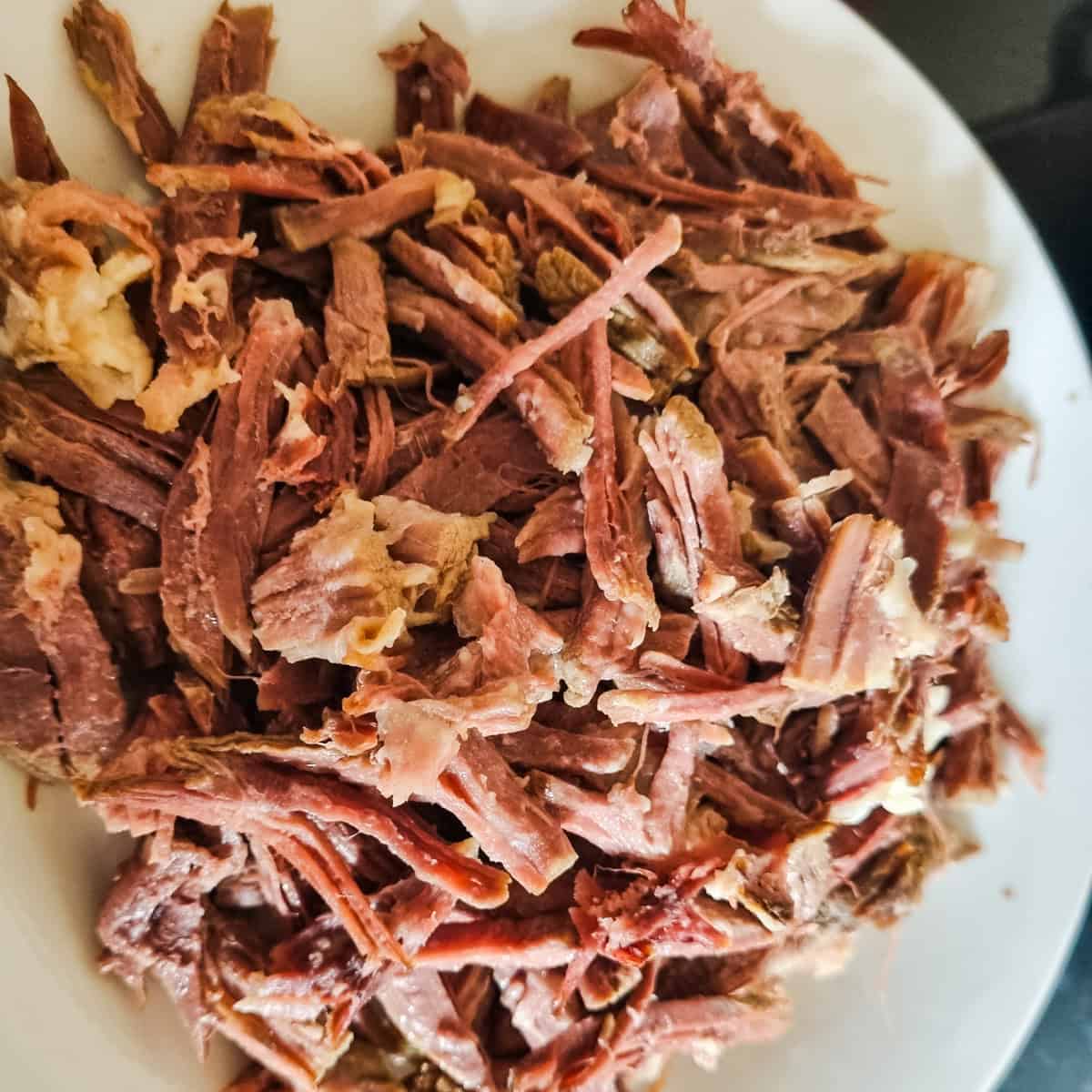
Step 2: Shred the beef
Lift the beef out of the pot and pull it apart, removing any connective tissue. Cut or shred into bite-sized pieces and set aside to add back into the finished soup.
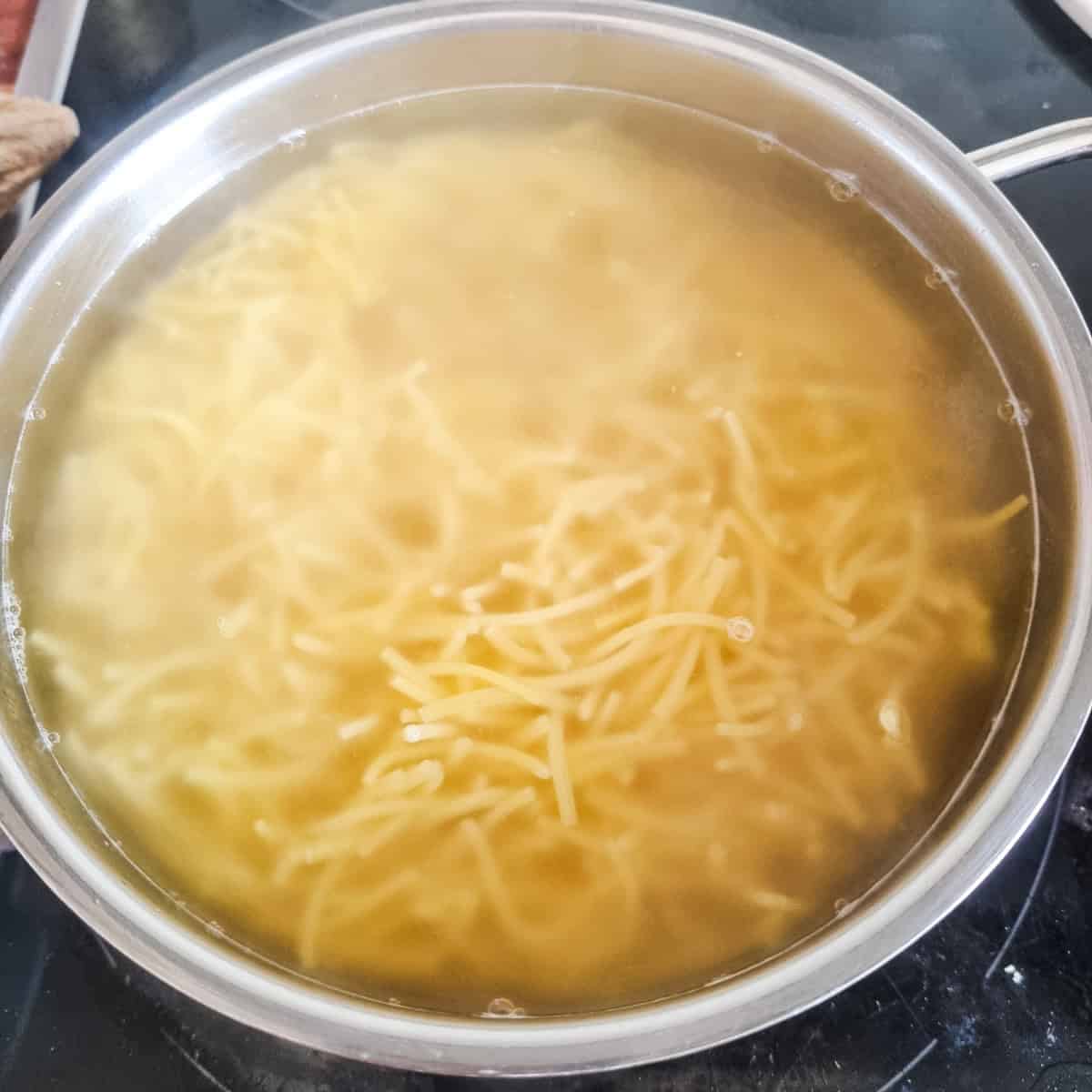
3. Cook the noodles
Always cook your soup noodles in a separate pot. This keeps the broth clear and stops the noodles from going mushy. Add them to the soup just before serving.
Want to save this recipe?
How to Serve German Beef Soup
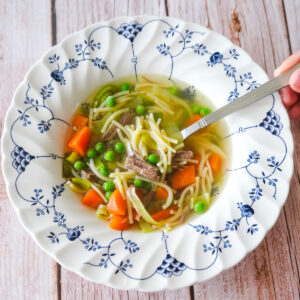
The broth is clear and golden, made the traditional way: slowly. The beef is deliciously juicy and falls apart at the touch of a fork, while the freshly cooked vegetables add colour and freshness to the bowl. The thin soup noodles tie it all together into something wonderfully comforting.
Serve straight from the pot into deep bowls, scattered with freshly chopped parsley or chives. A crusty bread roll on the side is all you need.
Storage Instructions
As mentioned, it is best to store homemade beef noodle soup without the noodles. They will get mushy and overcooked. Place the leftover soup in an airtight container in the fridge for up to 3 days.
This easy beef broth and vegetable soup recipe is also perfect for freezing. Before freezing, it should first be allowed to cool to room temperature and then packed in an airtight container to prevent freezer burn. Then it should keep for up to three months.
More German Soup Recipes

Have you made this recipe?

I'd love to hear how it turned out! Leave a rating and comment below.
You'll help fellow readers enjoy it too and help me spread the word about German cuisine. - Marita x
Recipe
German Beef Noodle Soup (Rinderfleischsuppe)
Ingredients
- 500 g beef stewing beef with the bone in words great
- 1 onion
- 2 teaspoon salt
- ½ leek
- ¼ celery root
- fresh parsley
- 1 teaspoon peppercorns
- 4 juniper berries
- 2 bay leaves
For the soup
- ½ leek
- 3 carrots
- 150 g frozen peas
- 200 g German soup noodles
- Fresh parsley leaves
Instructions
Make the Beef Broth
- Wash the vegetables (only peel if really necessary) and cut into rough chunks. Add the beef, prepared vegetables, and salt to a large pot.500 g beef, 1 onion, 2 tsp salt , ½ leek, ¼ celery root , 2 bay leaves, fresh parsley
- Lightly crush the peppercorns and juniper berries (affiliate link) to release their flavour, then add those to the pot too.1 tsp peppercorns , 4 juniper berries (affiliate link)
- Cover with cold water and bring to a slow boil - starting cold is the key to keeping your broth clear and golden. Once it's boiling, put the lid on and let it simmer gently on a low heat for around 2 hours. If any foam rises to the surface, just skim it off. You're looking for the beef to be tender but still holding its shape.
Make the Soup
- Peel the carrots and cut into small dice. Slice the leek into fine rings.½ leek, 3 carrots
- Pour the strained broth into a clean pot and cook the carrots, leek, and peas for around 10 minutes until tender. Meanwhile, pull the beef apart, removing any connective tissue, and cut into bite-sized pieces. Add the beef back into the broth to warm through. Season with salt and pepper to taste.150 g frozen peas
- Cook the soup noodles in a separate pot until al dente, then add them to the soup just before serving. If you're planning on having leftovers, hold back on adding all the noodles atonce - they'll keep soaking up the broth and go mushy overnight200 g German soup noodles (affiliate link)
- Scatter over the fresh parsley and serve.Fresh parsley leaves
Want to save this recipe?
 Made this recipe?Drop a ⭐ rating and a quick comment below. I personally read and reply to every review!
Leave a Reply