

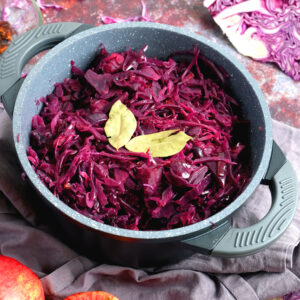
German Red Cabbage (Rotkohl) is a classic German side dish - tender braised cabbage slow-cooked with tart apples and warming spices until gloriously sweet, sour and fragrant. It's the recipe that has me swooning every single time, and once you smell it bubbling away on the stove, you'll understand why.
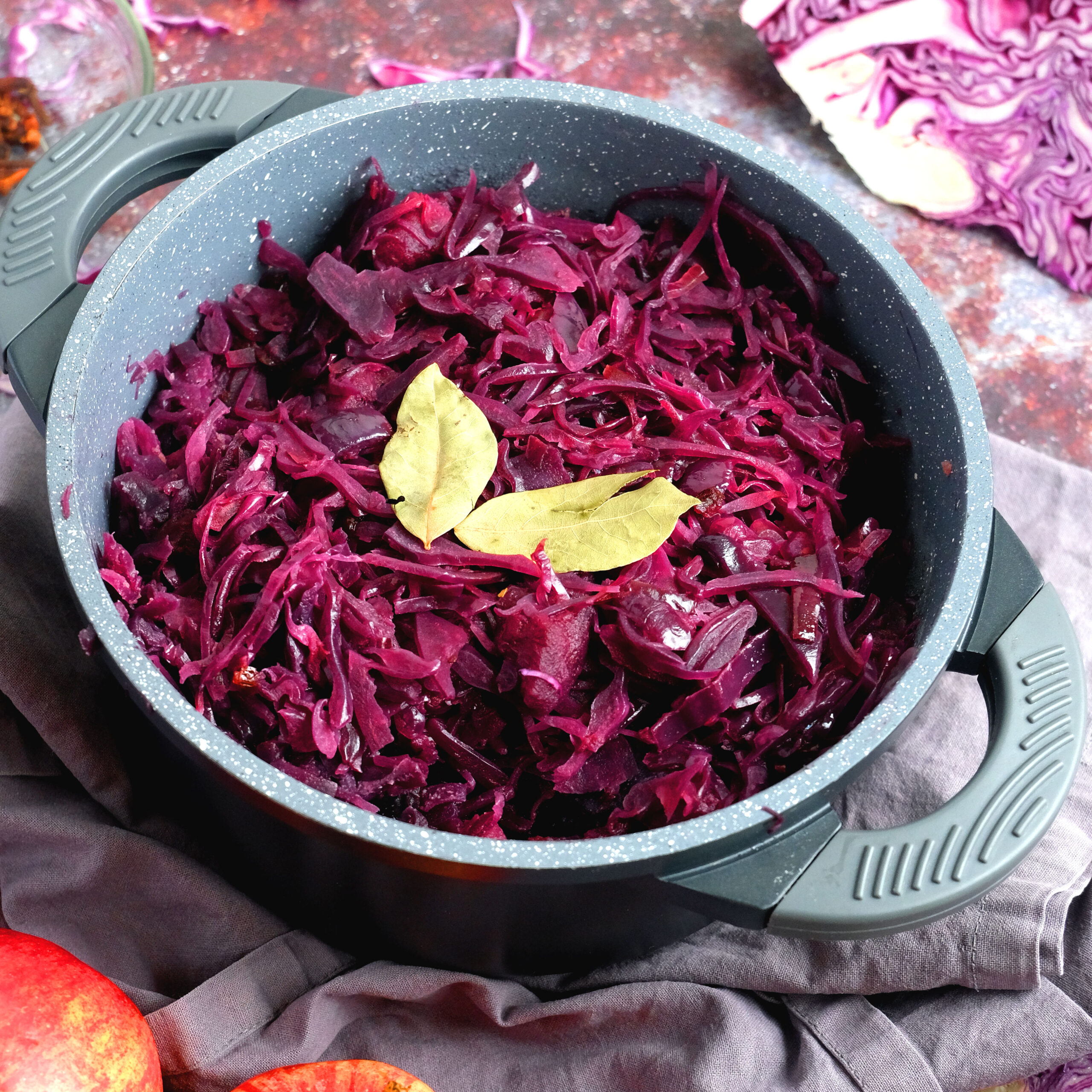
This authentic recipe from my mom brings me straight back to the Rotkohl I grew up with in Germany - slow-braised with cloves, cinnamon, and bay leaves until every bite is a sweet and sour, tart and fruity taste sensation. Whether you're making it for Oktoberfest, a Christmas roast, or a cozy Sunday dinner, this is the real deal.
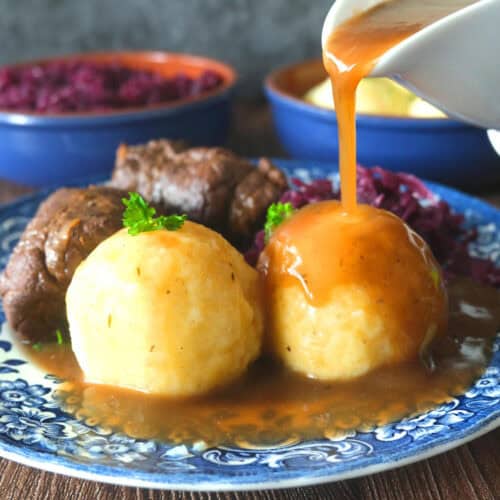
This reader-favourite recipe even made it into my debut cookbook, German Kitchen: Classic Dishes - and once you try it, you'll understand why. Traditional German recipes like Sauerbraten, Beef Rouladen and Potato Dumplings simply wouldn't be the same without a generous spoonful of Rotkohl alongside them.
What is Rotkohl?
German red cabbage, known as Rotkohl or Apfelrotkohl in Germany, is a traditional braised side dish made from red cabbage slow-cooked with tart apples, red wine vinegar, brown sugar and warming spices including cloves, cinnamon and bay leaves. The result is a tender, deeply flavoured sweet and sour dish that is a staple of German cuisine - served alongside everything from Sauerbraten and Beef Rouladen to roast duck and bratwurst.
Regional names for red cabbage in Germany
The name for red cabbage in German depends on which region you're in - and there are quite a few! The most common term is Rotkohl, which you'll hear across northern Germany. If the recipe includes apples - like this one - it becomes Apfelrotkohl or Apfelrotkraut. Not sure how to pronounce it? As an English speaker, say "ROTT-cole" and you'll be pretty close.
Here's a quick breakdown of the regional German names for red cabbage:
- Rotkohl: Northern Germany (Schleswig-Holstein, Hamburg, Lower Saxony, northern Saxony-Anhalt, Berlin, Brandenburg, Mecklenburg-Western Pomerania, North Rhine-Westphalia), Switzerland
- Rotkraut: Mid and Southern Germany (Saxony, Thuringia, Hessia, Baden, Pfalz, Franconia), East-Austria, Switzerland
- (Rot-/Blau-)Kappes: Nordrhein-Westfalia, Rhineland
- Blaukraut: South Germany (Württemberg, Bavaria), Austria, Switzerland
Why do Germans call red cabbage "red" - or sometimes "blue"?
Here's a fun piece of German food trivia: once red cabbage is cooked, it doesn't actually turn red - it turns purple. Yet in most of Germany it's still called Rotkohl (red cabbage). Why? Because the German word for purple, Lila, wasn't widely used until the 18th century, so "red" stuck. In southern Germany and Austria however, people noticed the blue-purple hue and called it Blaukraut - literally "blue cabbage" - instead.
So is it red cabbage or purple cabbage? In Germany, it depends entirely on where you're standing. Either way, it tastes absolutely delicious.
Want to save this recipe?
Here is the simple food science for you: the colour of your cooked Rotkohl actually depends on what you put in it. Acidic ingredients like red wine vinegar help the cabbage keep its deep red-purple colour, which is why we add it early in the recipe. Sweet ingredients like apple juice or orange on the other hand push the colour towards blue. So if your Rotkohl comes out looking more blue than purple, your balance has tipped too sweet. An additional splash of vinegar will bring the colour and the flavour right back
Ingredients you'll need
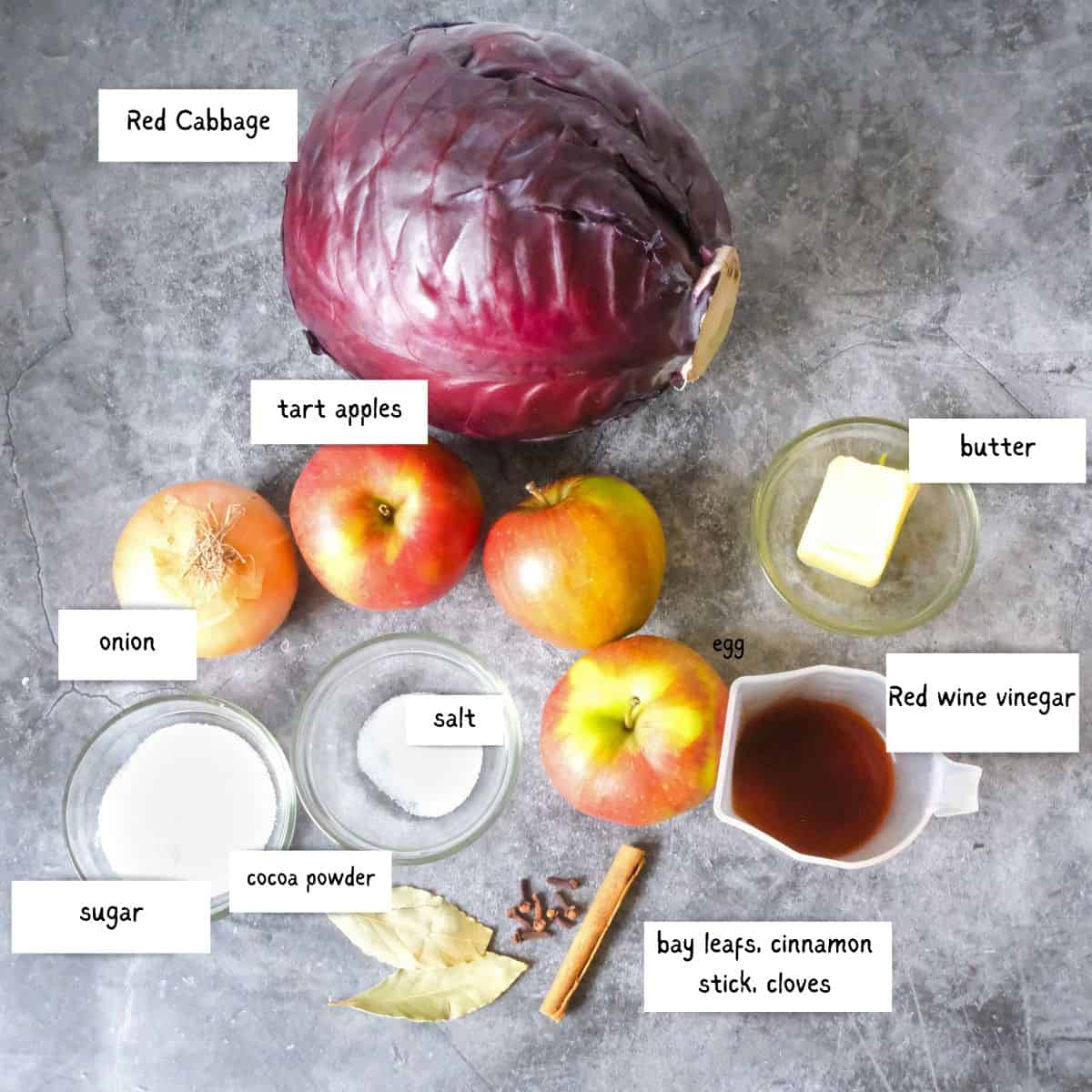
You only need a handful of simple ingredients to make this authentic German red cabbage recipe, and most of which you likely already have in your pantry.
- Red cabbage, finely shredded. This is the star of the dish and what gives this braised red cabbage its characteristic deep purple colour. A food processor or mandolin saves a lot of time, but a sharp knife works perfectly well too.
- Tart apples, which are what makes this an Apfelrotkohl. In the US, Granny Smith or Honeycrisp work beautifully. Braeburn or Cox are great if you can find them. The tartness of the apple is key to achieving that classic sweet and sour Rotkohl flavour.
- Onion, which caramelises in the butter to build a deep, rich sweetness at the base of the dish.
- Butter. Swap for vegetable oil to make this vegan German red cabbage.
- Brown sugar, which balances the sourness of the vinegar. Substitute with a sugar-free sweetener if needed.
- Red wine vinegar, which gives this braised red cabbage its signature sourness and helps it keep its vibrant colour. Apple cider vinegar works as a substitute.
- Cloves, cinnamon stick (affiliate link) and bay leaf, the warming spice bundle that makes authentic German red cabbage smell incredible. Pro tip: tuck your cloves into a loose tea bag so you can fish them out easily at the end. No more speed bumps!
How to cut red cabbage
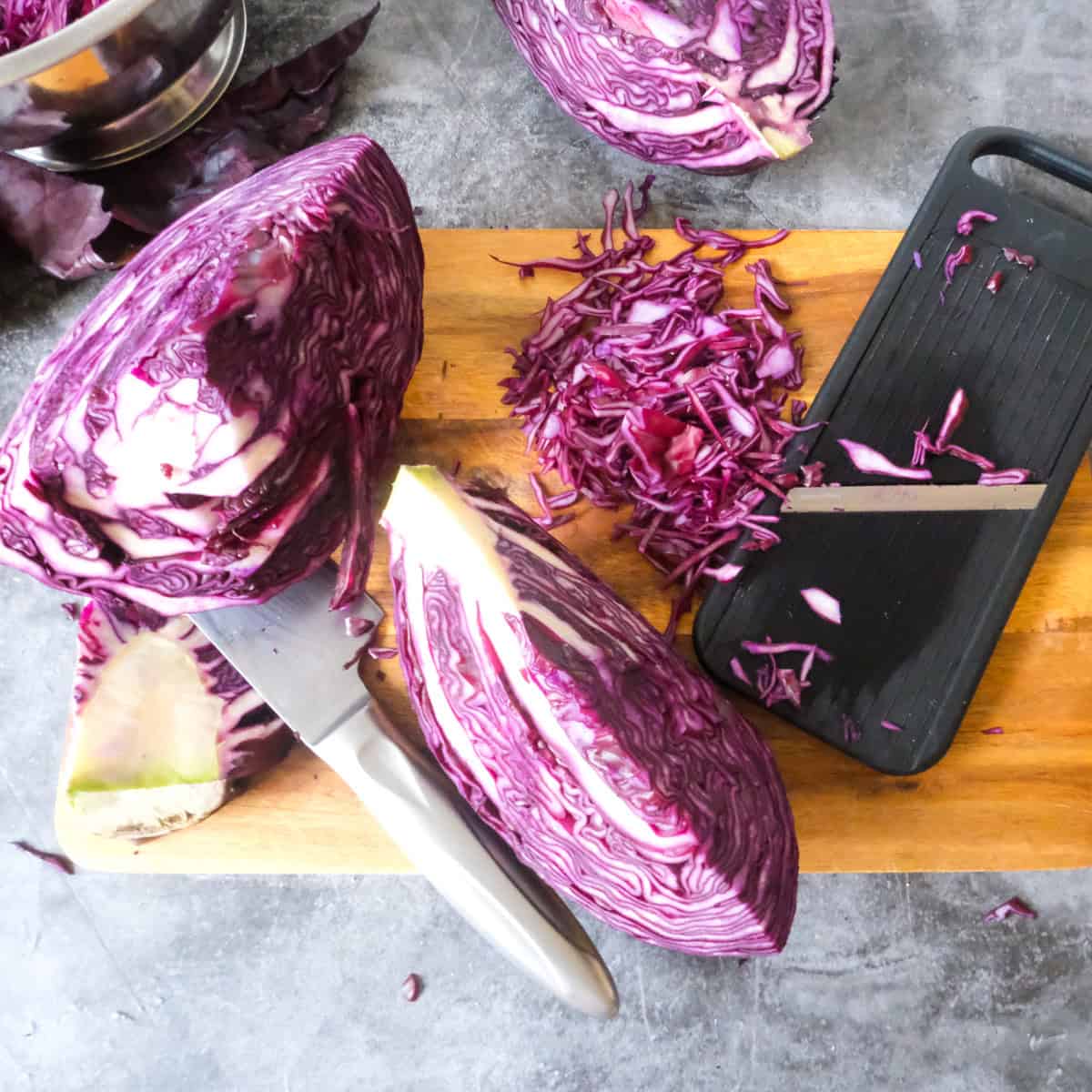
Fair warning: red cabbage stains everything it touches, including your hands (I learned that the hard way!), so wear disposable gloves or rub a little cooking oil onto your hands before you start. Remove the outer leaves, rinse under cold water, quarter the cabbage and use a small knife to remove the tough white core from each quarter. Slice into fine, even strips around 3 to 6 mm thick. A food processor or mandolin is my preferred way, but a sharp knife works perfectly well. Once shredded, pour the red wine vinegar over the cabbage straight away to preserve its characteristic deep purple colour.
How to make German Red Cabbage
To make German-style red cabbage you will have to "braise" it. Basically, it means you fry it in butter before being cooked.
3 Simple Recipe Steps
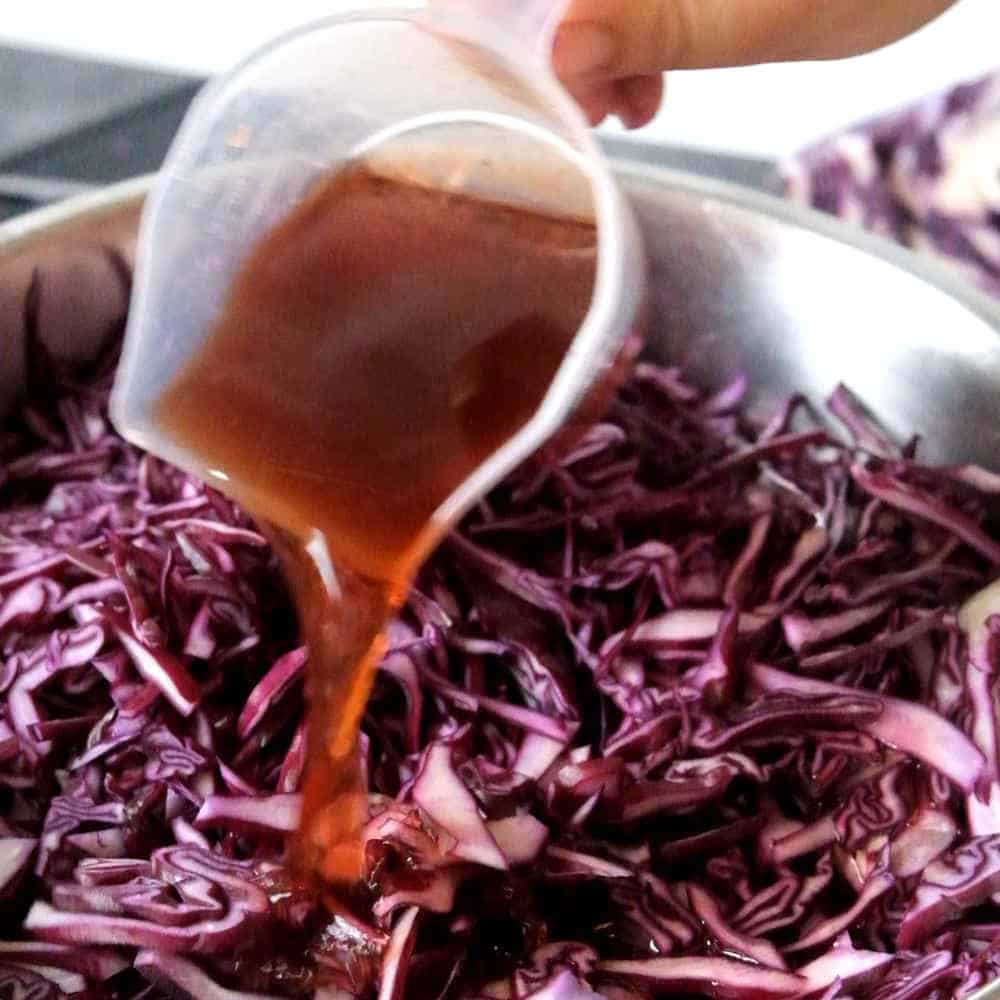
Step 1: Prepare the Cabbage
Shred the red cabbage into fine strips and transfer to a large bowl. Pour the red wine vinegar over it straight away to preserve that deep purple colour.
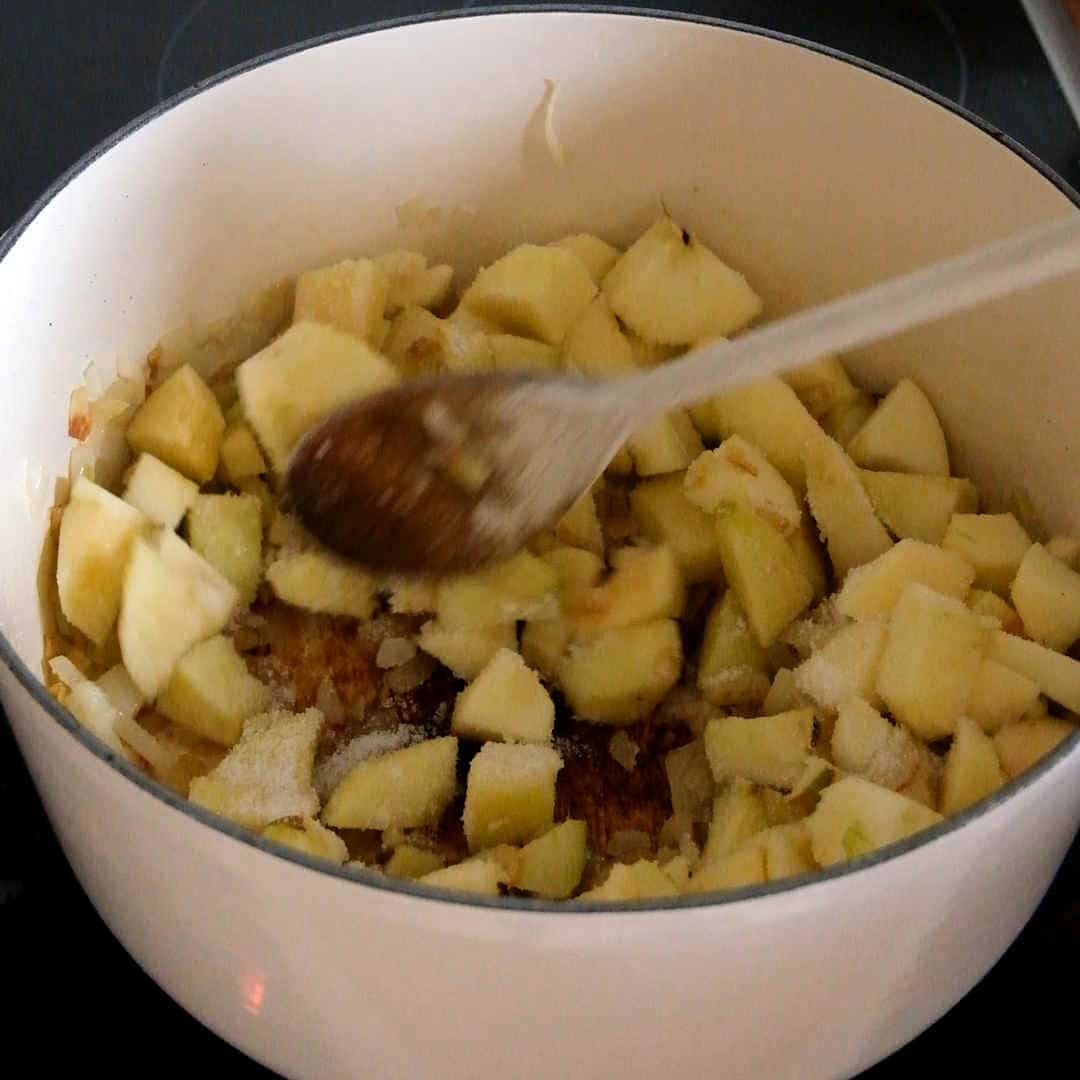
Step 2: Caramelise the onions and apples
Melt the butter in a large pot over medium heat. Fry the onions until they begin to soften and turn golden, then add the sugar and apples and cook until they just start to caramelise. Add the cabbage and stir everything together for 5 minutes.
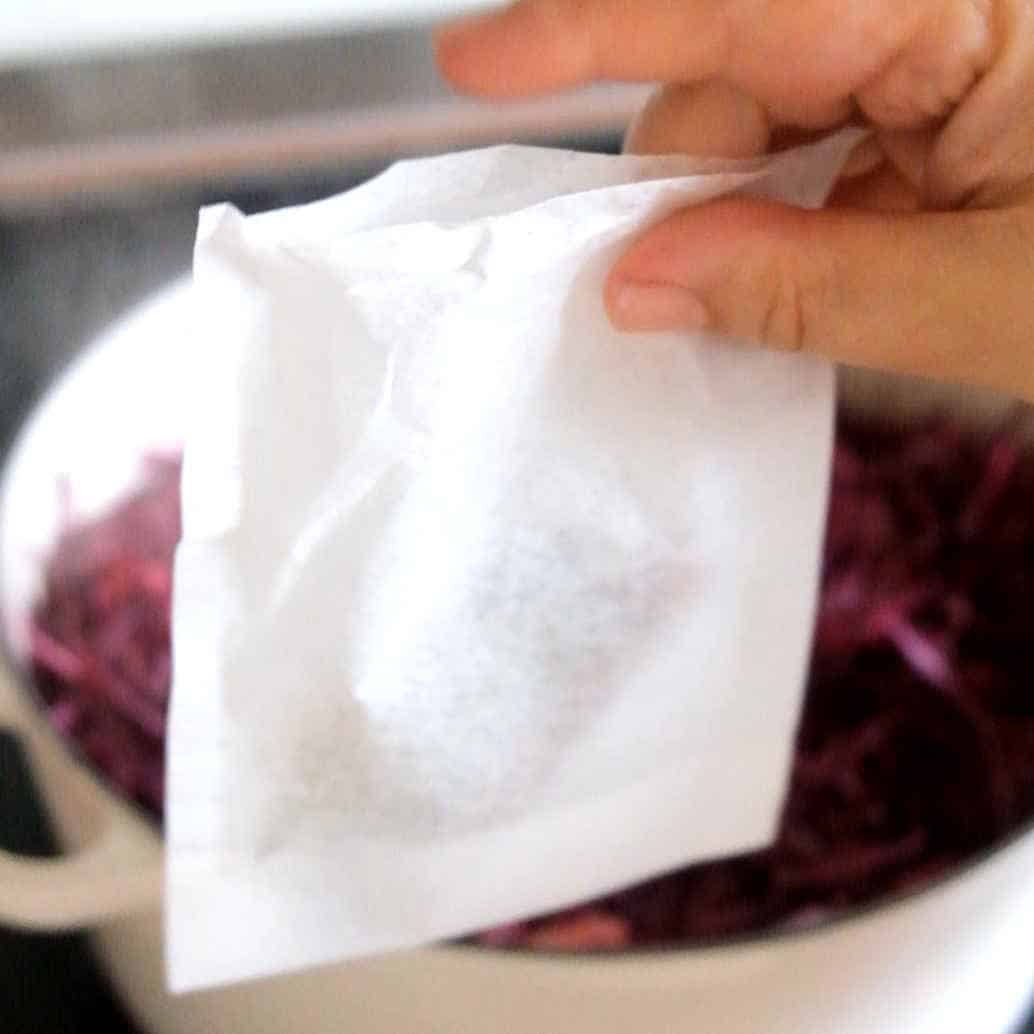
Step 3: Add the spices and braise
Tuck the cloves into a loose tea bag (optional), then add to the pot along with the bay leaf, cinnamon stick (affiliate link), salt and water. Place a lid on the pot and leave to braise on a low heat for 1 hour, stirring occasionally. If the finished Rotkohl is too liquidy, mix 1 tablespoon of flour with 2 tablespoons of water and stir through.
Can you cook red cabbage in a slow cooker / crock pot?
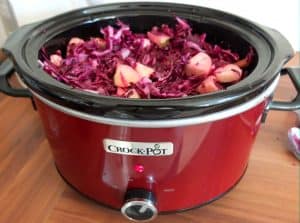
Yes, and it is one of my favourite ways to make it! Follow steps 1 and 2 above, then transfer everything into your slow cooker (affiliate link) with the spices, vinegar, sugar, salt and just a couple of tablespoons of water. Cook on low for 5 hours or on high for 3 hours. One thing to keep in mind: you need much less water than the stovetop version as very little liquid evaporates. If the finished Rotkohl is too liquidy, remove the lid and cook on high for a further 20 to 30 minutes to reduce it down.
Variations: how to make this recipe your own
Every household has its own German red cabbage recipe. Why don't you give this one a try and then adapt it to your family's tastes? Here are some suggestions
- Vegan Rotkohl: simply swap the butter for vegetable oil
- Add bacon: fry a couple of strips of bacon with the onions at the start for a smoky, meaty depth of flavour
- Red wine or port: replace some of the water with a splash of red wine or port for a richer, more festive braised red cabbage
- Redcurrant or lingonberry jam: stir a tablespoon in right at the end of cooking for a traditional fruity finish. In the US, cranberry sauce (affiliate link) or blackberry jam work beautifully as a substitute
- Juniper berries (affiliate link): add 3 to 4 berries to your spice bundle for a subtle, piney warmth
- Sugar-free: swap the brown sugar for your preferred sweetener and this braised red cabbage becomes Slimming World and Weight Watchers friendly too
- Apple cider vinegar: works just as well as red wine vinegar if that is what you have on hand.
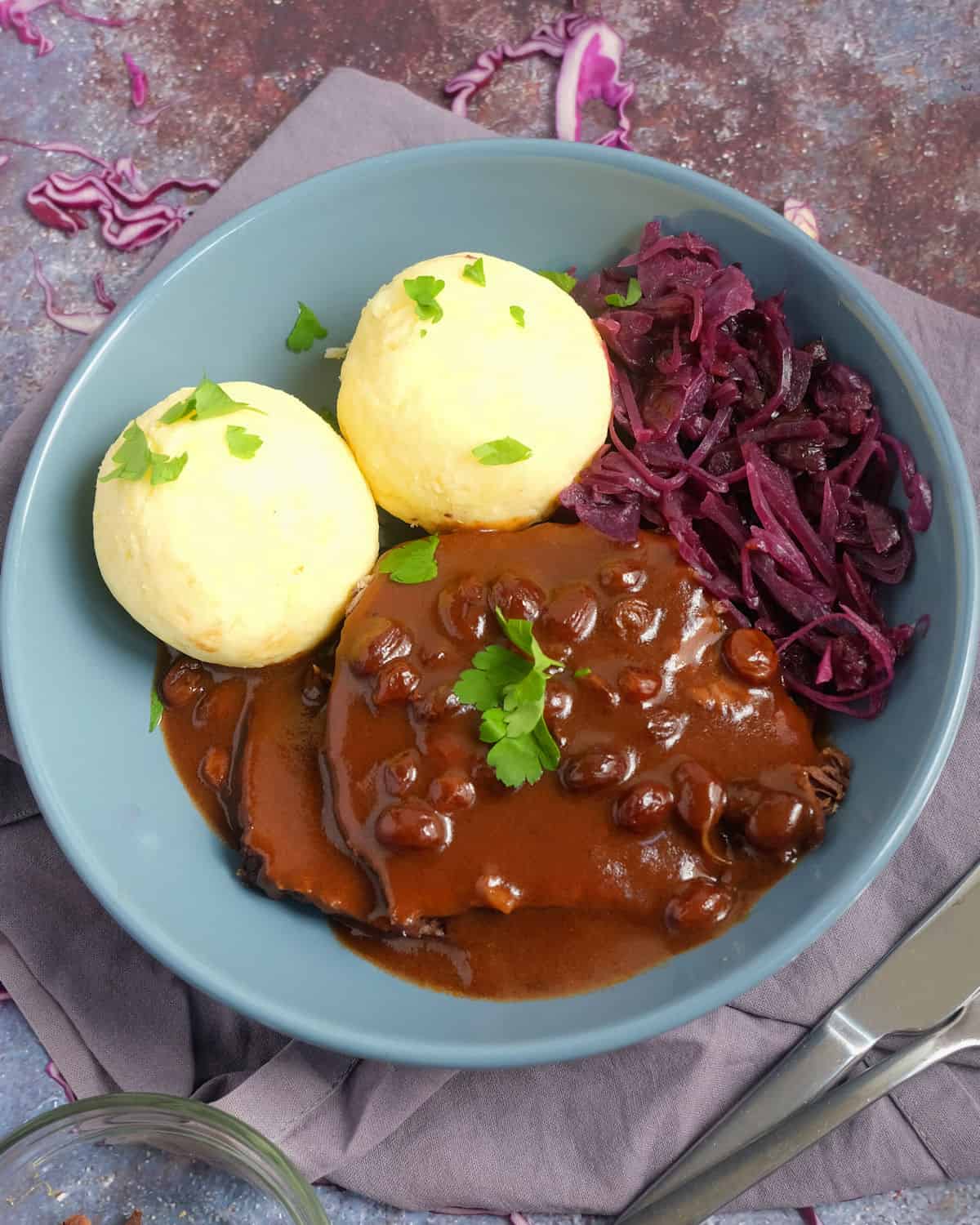
What do Germans eat with Rotkohl?
Rotkohl is the ultimate German side dish for rich, hearty meals. Its sweet and sour flavour cuts beautifully through fatty meats like roast duck and goose, which is why it is such a staple of German Christmas Food. But don't save it just for the festive season - this braised red cabbage is equally at home on a weeknight dinner table alongside bratwurst, pork chops or even a simple ham.
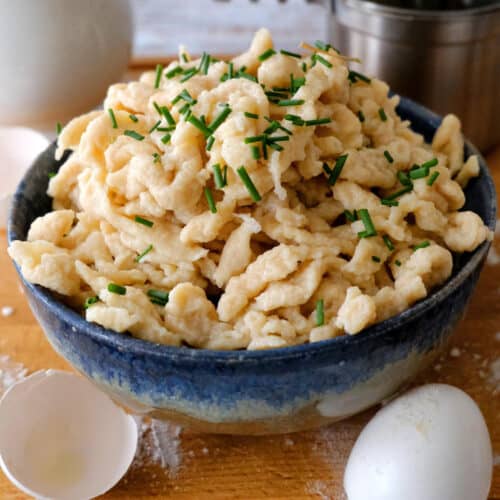
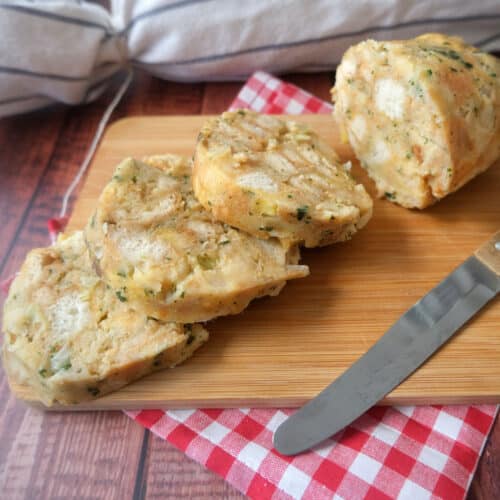
In Germany, Rotkohl is traditionally served as part of a classic trio: a rich meat dish, a starchy side like potato dumplings or Spätzle, and a generous spoonful of Apfelrotkohl. Here are some of my favourite dishes to serve it with:
Goulash
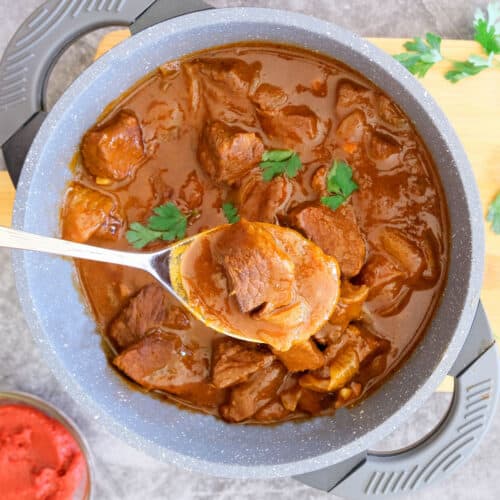
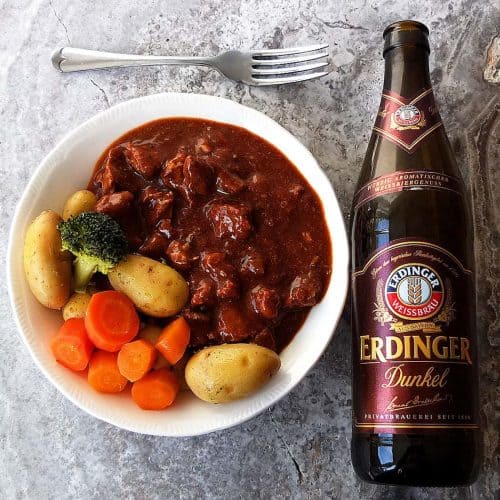
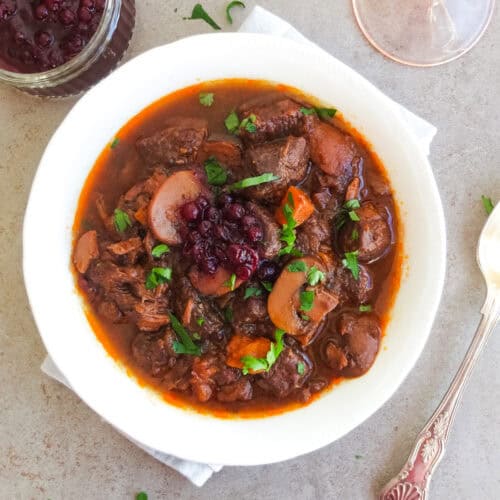
Classic German Sunday Roasts
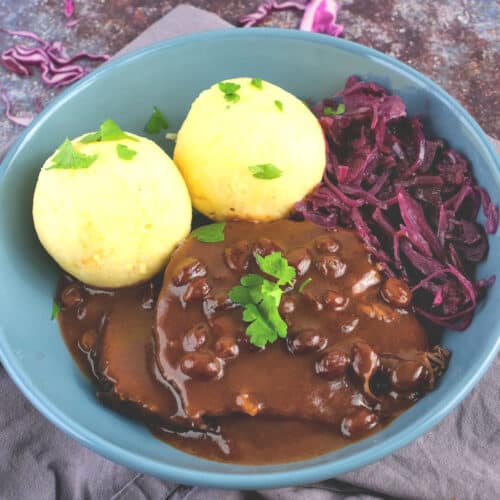
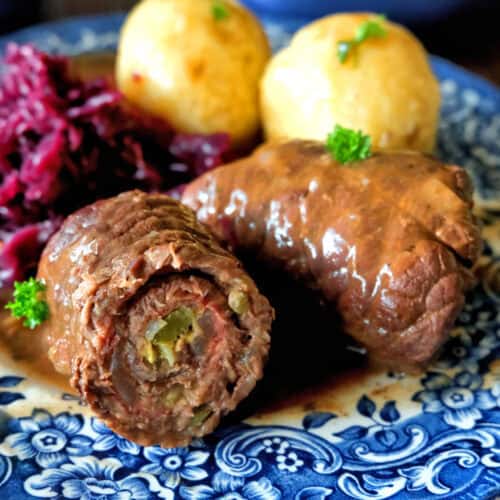
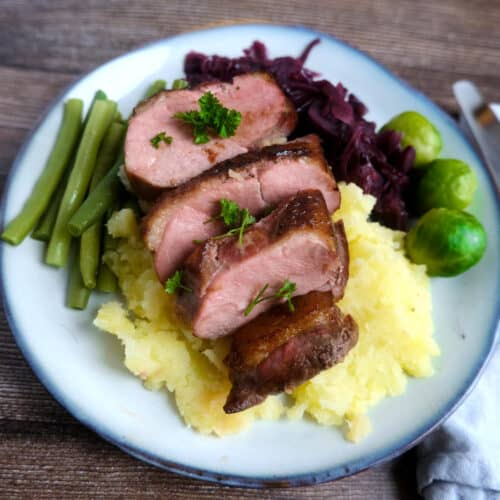
Starchy Side Dishes

Can you make red cabbage and apple ahead of time?
This is actually my favourite way to eat it. Rotkohl tastes even better the next day once the flavours have had time to deepen and meld together. It is one of those dishes that genuinely improves with a night in the fridge, which makes it perfect for Christmas, Thanksgiving or any occasion where you want to get ahead in the kitchen.
In the fridge: Store in an airtight container for up to 5 days. Make sure you remove the cloves, bay leaf and cinnamon stick (affiliate link) before storing, as if you leave them in the flavour keeps intensifying and can become overpowering.
In the freezer: This braised red cabbage freezes beautifully. Make a big batch, divide into portions once cooled and freeze for up to 3 months. It is a brilliant midweek side dish to have on standby.
To reheat: Warm gently on the stovetopThis red cabbage side dish is perfect for making ahead. I think it probably tastes better the next day. You can also make it several months in advance if you freeze it once it cools after cooking.
Have you made this recipe?

I'd love to hear how it turned out! Leave a rating and comment below.
You'll help fellow readers enjoy it too and help me spread the word about German cuisine. - Marita x
Recipe
Traditional German Red Cabbage and Apple Recipe
Equipment
- large cooking pot (at least 3 ltr)
- spice bag or loose teabag (optional)
Ingredients
- 1 kg (2 lb) red cabbage Depending on how much red cabbage you have, adjust the other quantities by clicking the serving size buttons above.
- 2 onions approx 150 gr / 5 oz
- 3 tart /sour apples approx 400 gr / 14 oz. See notes for which types work best.
- 50 g (¼ cup) butter or 2 tablespoon vegetable oil for vegans
- 1 bay leaf
- 4 cloves
- 1 cinnamon stick (affiliate link)
- 60 ml (¼ cup) red wine vinegar can be subsituted with cider vinegar
- 125 ml (½ cup) water
- 2 tablespoon sugar
- 1 teaspoon salt
- 1 tablespoon flour for thickening (optional)
Instructions
To cook in a saucepan
- Remove the leaves and stalk from the red cabbage; wash them and cut into fine strips. I suggest shredding them in your food processor to save time. Once transferred into a bowl pour the red wine vinegar over it.1 kg red cabbage, 60 ml red wine vinegar
- Peel and finely slice the onions.2 onions
- Peel the apples, remove the core, and chop into approx. 2.5 cm (1 inch) cubes.3 tart /sour apples
- In a large saucepan melt the butter or oil on medium heat. Add the onions and fry them until they begin to brown. Now add the sugar and apples and fry until they start to slightly caramelise. Add the cabbage to it and fry for 5 minutes. Continue to stir it to make sure it does not burn.50 g butter, 2 tbsp sugar
- Add the bay leaf, cloves, salt, cinnamon stick (affiliate link) and water. Place a lid on the pot and leave to steam on a low heat for about 1 hour. Stir it occasionally to ensure the bottom does not burn.
- If you find the cabbage too liquidy, mix 1 tablespoon flour with 2 tablespoons of water in a small bowl and stir it into the cabbage pot.1 tbsp flour
- Add more sugar or salt to taste.
- Serve immediately or the next day. This dish sometimes tastes even better the next day and freezes well.
To cook in the slow cooker
- Grease the bowl of your slow cooker (affiliate link) with some butter.
- Remove the leaves and stalk from the red cabbage; wash them and cut into fine strips. I suggest shredding them in your food processor to save time. Once transferred into a bowl pour the red wine vinegar over it.1 kg red cabbage, 60 ml red wine vinegar
- Peel and cube the onions.2 onions
- Peel the apples, remove the core, and chop into approx. 2.5 cm (1 inch) cubes.3 tart /sour apples
- Add all the ingredients to the slow cooker (affiliate link) and cook on low for around 5 hours, or on high for 3-4 hours if you're short on time. Note: unlike the saucepan method, the onions and apples aren't caramelized first here, this is intentional for the slow cooker (affiliate link) version and gives a slightly softer, more mellow flavor.50 g butter, 1 bay leaf, 4 cloves, 1 cinnamon stick (affiliate link), 125 ml water, 2 tbsp sugar, 1 tsp salt
- If the cabbage looks too liquidy at the end of cooking, mix 1 tablespoon flour with 2 tablespoons of water and stir it in, then let the slow cooker (affiliate link) sit on high, uncovered, for an extra 15-20 minutes to thicken.1 tbsp flour
Video
Notes
Storage Instructions
In the fridge
The braised red cabbage will stay good in the fridge for up to 4 days. Make sure you keep it in an airtight container. Remove all the spices (cloves, bay leaves and cinnamon stick) before storing, as otherwise, the flavor intensifies.In the freezer
Make this recipe in big batches and store it in portions in the freezer. It stays good in the freezer for up to three months. Also, it is a perfect little side dish for a mid-week dinner.Want to save this recipe?
Nutrition
 Made this recipe?Drop a ⭐ rating and a quick comment below. I personally read and reply to every review!
Love this authentic German recipe?
This is one of 65 traditional dishes featured in my cookbook, German Kitchen-Classic Dishes - all tested, perfected, and handpicked by readers like you!


darryl dowers says
Hi Maria: I make my red cabbage similar. I saw a recipe on a cooking show. I use a large Red onion I also use brown sugar 1/4 cup packed tight. I use cider vinegar not red wine vinegar and I use three red apples. I put everthing in an 8 qt pot and cook for an hour till the cabbage wilts. I turn it off let it cool and refrigerate for subsequent use.
Marita Sinden says
Hi Darryl, thanks for sharing how you make yours! Red onion, three apples and cider vinegar all sound delicious. And making a big pot to cool and keep in the fridge is the best way to do it, since Rotkohl tastes even better the next day. Happy cooking!
Chris Horan says
Hi it says see notes for choice of apples but can't seem to find it
Marita Sinden says
Hi Chris, sorry about that, the notes section on the recipe card is empty. Tart apples work best. Granny Smith or Honeycrisp are great in the US, and Braeburn or Cox are good too. You want that sweet and sour balance. I'm fixing the recipe card so it's easier to find. Thanks for pointing it out!
Barbara Blass says
Do you use high or low on the slow cooker?
Marita Sinden says
Hi Barbara - thank you for pointing it out. I just updated the recipe. Cook on low for around 5 hours, or on high for 3-4 hours if you're short on time.
Ann Blanchard says
I have tried to make this from memory, it was OK but now I will try your version and hope it is more to my liking, I will give you the rating after I make your recipe
Marita Sinden says
Yay ann - thank you, let me know how it goes 🙂
Jane Marks says
After being introduced to this while we lived in Bavaria, I quickly realized that it is my favourite. I make it often for my family 💗
Marita Sinden says
Thanks you Jane for the feedback. I am glad you like it and your family enjoys it too 🙂
Stella-Maria Thomas says
It's very close to my Oma's version, but she would thicken the sauce with a spoon or two of flour towards the end. I should also say that I cook mine in my pressure cooker. 20-30 minutes and you're done.
Marita Sinden says
Thank you Stelle-Maria! Yes I like to use my pressure cooker as well sometimes for convenience.
Peggy Bauer says
The best! My guests loved it!
Marita Sinden says
Thanks for your feedback! I am glad you and your guests enoyed it.
Takumi says
Hello, Ms. Marita! Thank you for sharing a great recipe. It was a big success! I also made your beef goulash to accompany, and my meat-eater American husband liked it both. But, he liked this cabbage-apple dish even more. As to the shredding of the cabbage, I first cut it finely with a knife, and I tried to grate it with a cheese grater. But in the end, I agree, as you say, a food processor was much easier.
Marita Sinden says
Thank you Yuko, I am pleased you and your husband enjoyed the recipe.
Vicki says
Could this be canned? Been trying to find one like my gr grandmothers
Marita Sinden says
Hi Vicky, thanks for your question. Yes it can be canned like many other foods as well. Hope you find a recipe that is like your grandmothers!
Gabriela says
This German Red Cabbage is absolutely stunning. I love how it is accidental vegan as well. Thank you so much.
renate says
The Rotkohl recipe is perfect, but I don't like the cloves and cinnamon in mine.
Marita says
You can leave them out if you like. Just make the recipe your own 🙂
Amy Alt says
I must have claimed about 25 dishes as my favourite food in the last month alone! I love German red cabbage- I never knew what gave it such an interesting flavour though but I now I think back I must have been eating a version similar to this with vinegar and apples in. I am a big lover of a lot of european cusine: french, italian etc but I have never eaten much German food so I am looking forwards to finding out some more classic dishes from your blog 🙂
Connie says
This recipe sounds perfect! I will be sure to share this. We really do enjoy the same foods 🙂 We normally have Sauerkraut with our Nürnberger Rostbratwurst.
Jennifer Philipp says
Oh my goodness, Marita. I think we are kindred spirits because these happen to be some of my favourite foods as well. My Oma would often pair red cabbage and kartoffel kloesse with roast duck, or even goose. Although she used to make red cabbage from scratch she now uses a jarred version. I will have to try your recipe though. It looks delicious!