



Have you ever heard of Bremer Klaben? While German Christmas Stollen gets most of the attention, this German Christmas bread recipe is a specialty from Bremen and Lower Saxony. It's a delicious buttery yeast bread made with marzipan, featuring chopped almonds, candied fruits, and a lot of rum-soaked raisins.
As my family owned a bakery in Bremen for two generations (read about my family history here), this bread is in my blood. Although I posted another Klaben recipe back in 2021, I've now updated it with the authentic original family recipe that my uncle Willehad made for years and sold in his Bäckerei Jünemann.
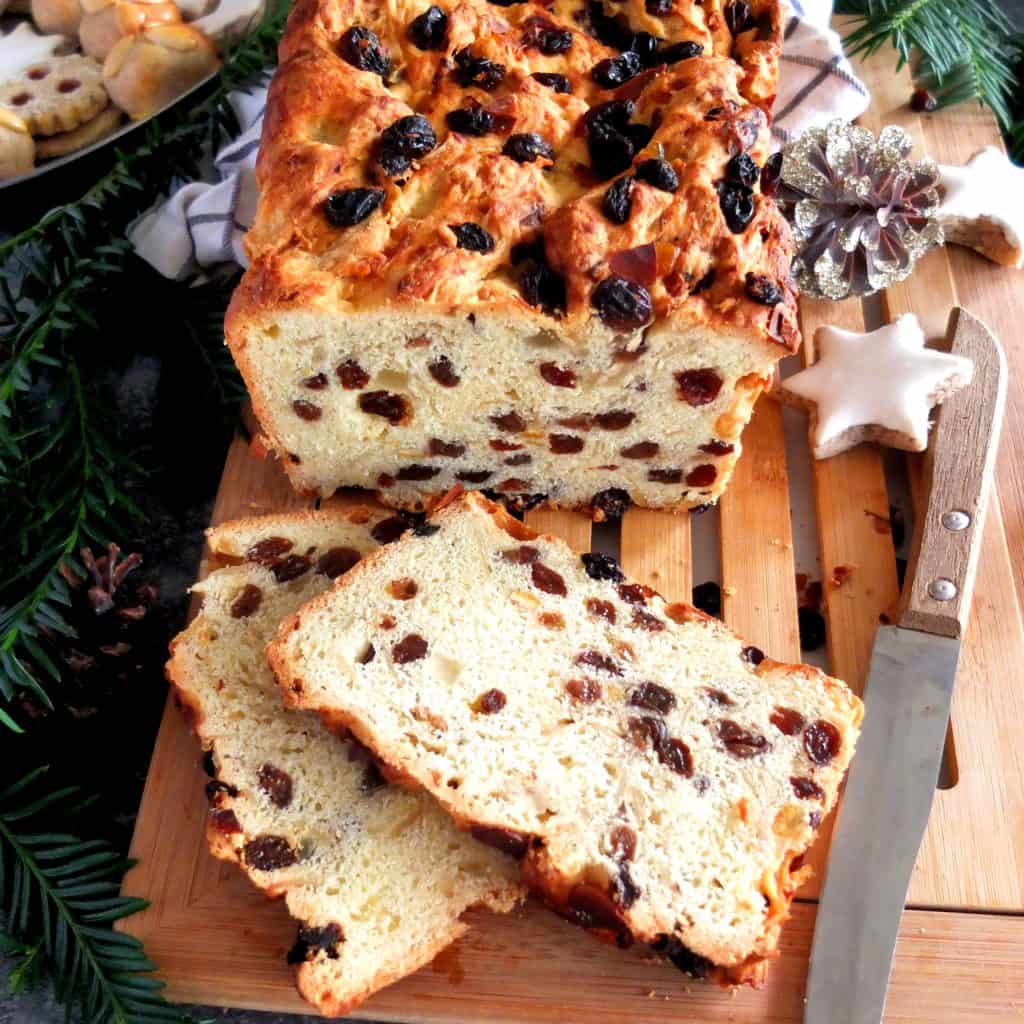
What is Bremer Klaben?
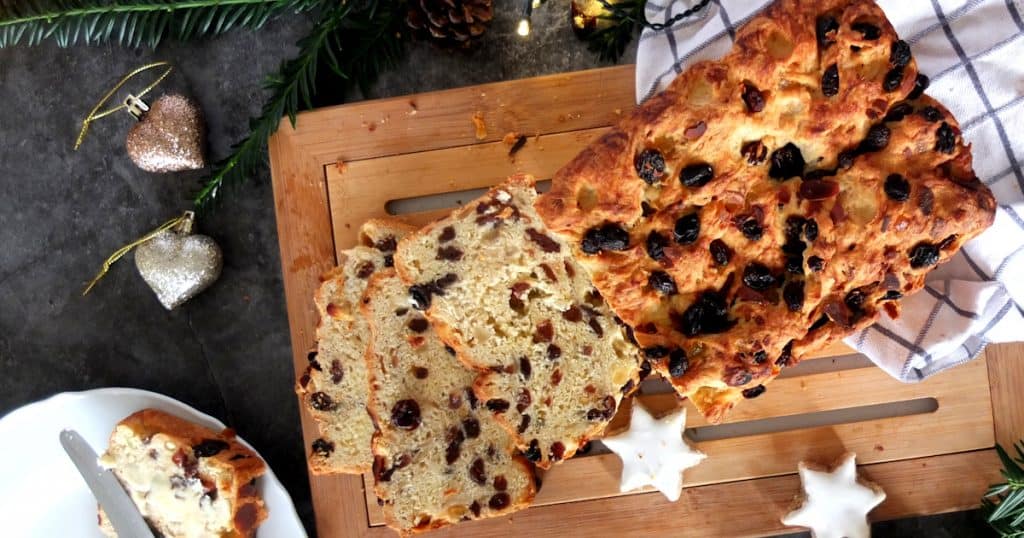
Klaben is a sweet bread made from a dry yeast dough, studded with raisins, candied citrus peel, and nuts. It's a specialty of the town of Bremen in Germany, and this German Christmas bread is traditionally enjoyed from October through December.
Bremen is an old Hanseatic city in northwest Germany and home to the famous Bremen Town Musicians, a fairy tale written by the Brothers Grimm.
Klaben isn't only eaten in Bremen but is also very common in the state of Lower Saxony, which surrounds Bremen. It's a popular Christmas market treat in the region.
Since 2009, the term "Bremer Klaben" has been protected under European law. Only products produced in Bremen and the surrounding regions are allowed to be called Bremer Klaben. [Source: Wikipedia-Bremer Klaben]
As an English speaker, you would pronounce Bremer Klaben as "KLAH-ben."
What is the difference between Dresdner Stollen and Bremer Klaben?
Some refer to Klaben and Stollen as two winter brothers from the north and south. They're not that different. Both are made from a heavy yeast dough and are studded with almonds, lemon, and orange peel.
However, there are five main differences between the two Christmas breads.
- Klaben contains more fruit than Stollen, whereas Stollen has more sugar in the dough. Klaben has a moister texture than Stollen, which is drier and more crumbly.
- Stollen is baked in an oval shape and folded in half to create its iconic form. Klaben is baked in a rectangular bread tin.
- After baking Stollen, you brush it with melted butter, sprinkle it with sugar, and dust it with icing sugar.
- Bremer Klaben is left plain after baking or brushed with egg white to make it shine. You can eat Klaben with savory toppings like butter and salt, mettwurst (smoked sausage), cheese, or on top of German black bread. Stollen, on the other hand, is eaten exclusively as a sweet treat.
History
The first official mention of the "Bremen Klavenbecker" was in 1593, though the tradition may be even older. Bremen was an important trade route during the Middle Ages, which explains the access to exotic ingredients like lemon and orange peel.
The high fat content and low liquid content in Klaben made this sweet Christmas bread incredibly durable, perfect for sailors to take on their long journeys at sea.
Today, a beloved tradition continues: the first Klaben of the year is sliced in Bremen's famous town square each November at exactly 11 am, when the Cathedral bell rings. Every year, exactly 100 meters of Klaben is prepared, with all profits going to charity.
How to make Klaben
Bremer Klaben is usually baked in a longer and narrower rectangular form than what I used. I learned the secret to a perfect Klaben is to evenly distribute the raisins in the dough (which I failed at). You can achieve this by kneading the dough by hand.
Ingredients you'll need:
For the detailed instructions and exact measurements, please jump to the printable recipe card
The klaben cake is made from a thick yeast dough made from water, instant yeast, granulated sugar, and all-purpose flour. The cake only has a little sugar because a lot of the sweetness comes from the marzipan, candied lemon and orange peel, and the raisins that are soaked in rum the night before. The chopped almonds give the Klaben a coarser texture. A pinch of salt balances the flavors.
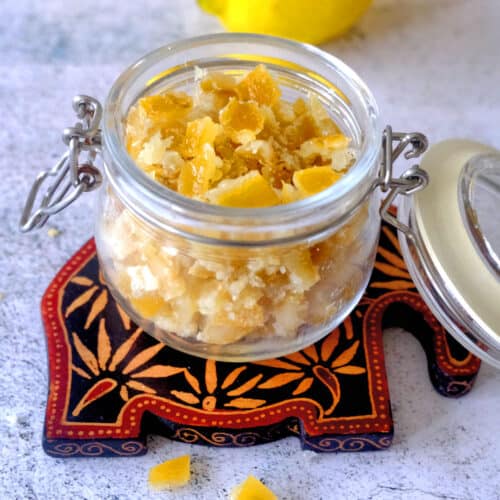
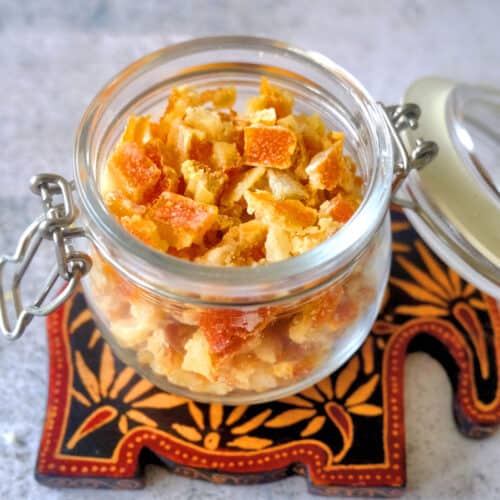
Make these Klaben ingredients yourself
Want to save this recipe?
4 Easy Recipe Steps:
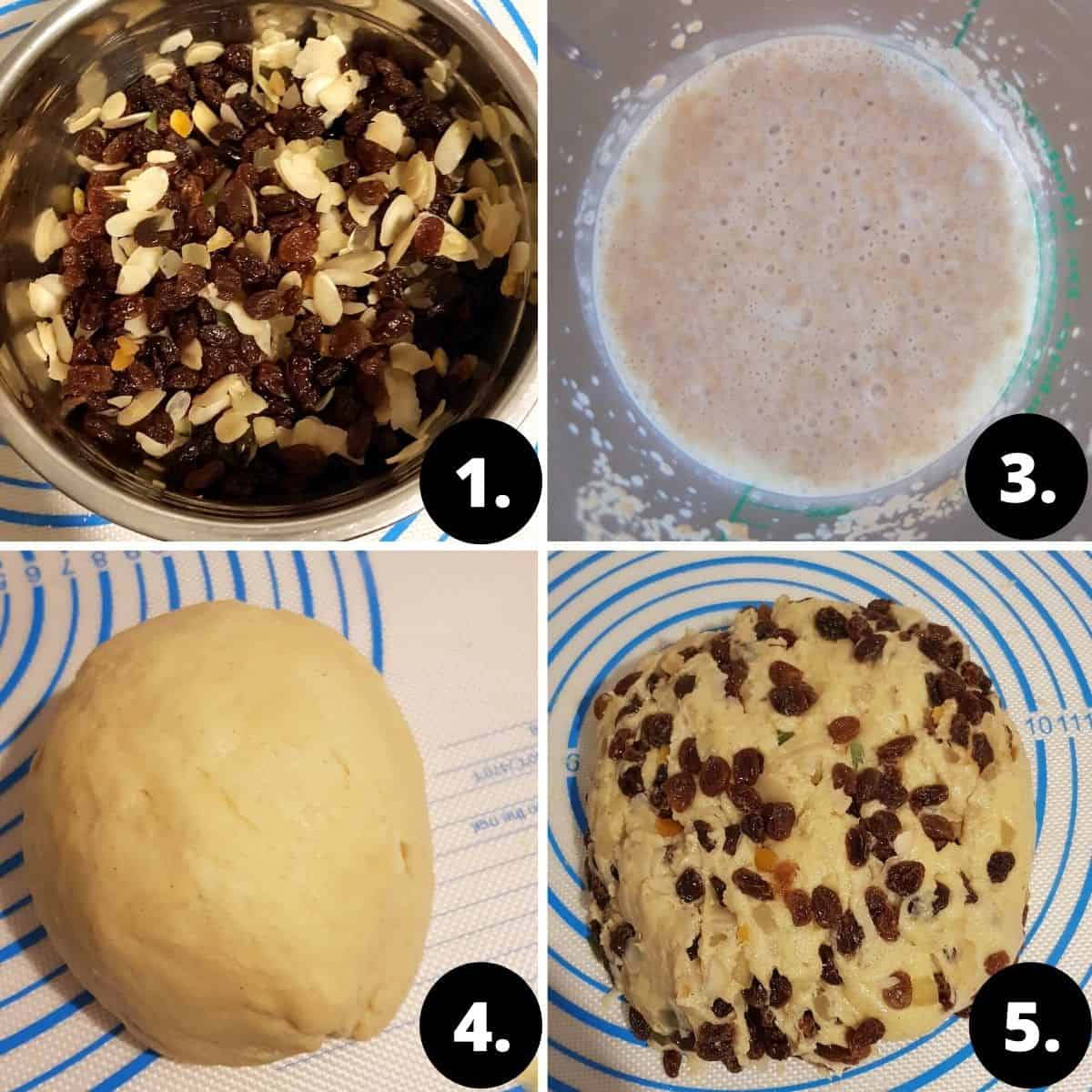
- Soak the fruit: The day before (or at least 1 hour ahead), soak the raisins, candied lemon and orange peel, and almonds in warm water mixed with rum.
- Make the dough: Mix yeast and sugar in lukewarm water until bubbly, then knead together with butter, flour, salt, lemon zest, and marzipan for 10 minutes. Let the dough rise for 60 minutes in a warm place.
- Add the fruit and shape: Drain the soaked fruit mixture and fold it into the dough until evenly distributed. Place the dough in a greased rectangular bread pan and let rise for 30 minutes.
- Bake: Bake at 180°C/350°F for 60-70 minutes until a skewer inserted in the middle comes out clean.
How to serve
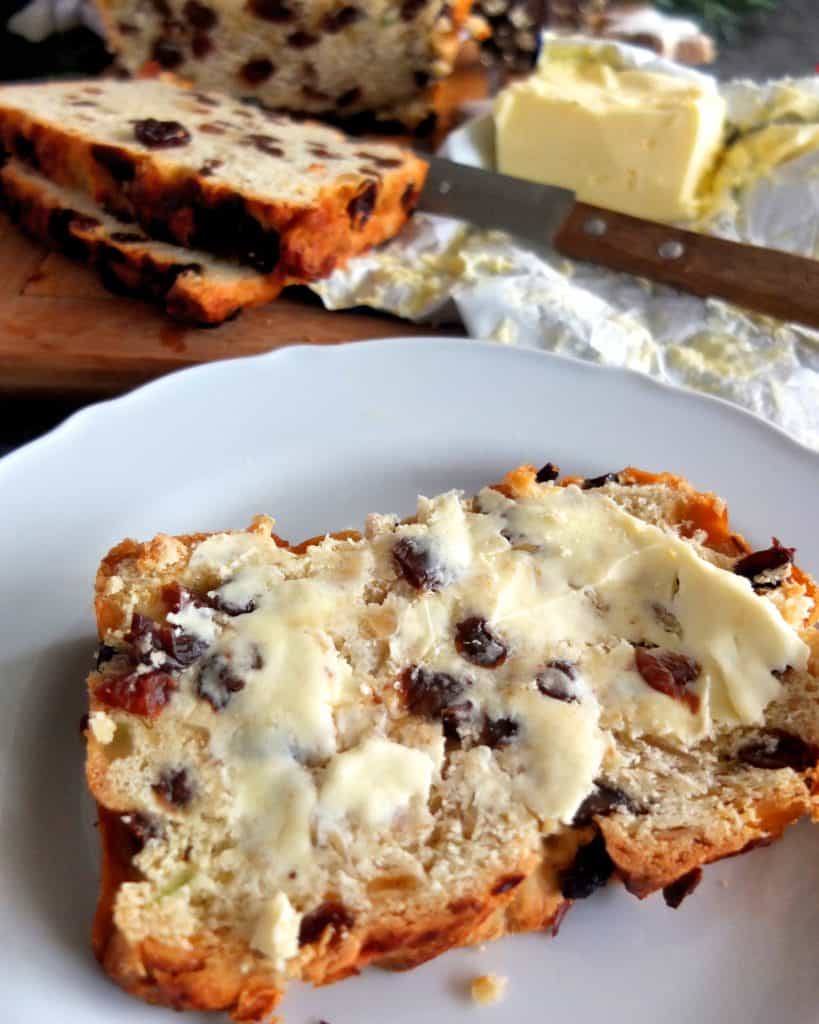
There are many ways that Klaben is served. Some like to eat it without any topping. However, others like it eat it, spread with butter. Others place it on top of "Schwarzbrot" (dark rye bread). Another option is to eat it with "Mettwurst" which is a raw smoked German Sausage. I like to eat it on its own or spread it with a little butter.
Storage Instructions:
The Bremer Klaben will keep up to three months. Because of its high-fat content, it is especially durable. It is also suitable for freezing.
Interested in German Christmas?
- Read my Guide on German Christmas Food.
- Discover all about German Christmas Market Food
- And see all of our Christmas Recipes
More German Christmas Baking Recipes
- Marzipan Cookies
- Lebkuchenherzen Recipe - German Gingerbread Hearts
- German Butter Cookies
- Vanillakipferl
- Baiser Cookies (Germen Merengue Cookies)
- Kokusmakronen (German Coconut Macaroons)
- Spitzbuben (German Jam Cookies)
- Bethmännchen (Almond Marzipan Cookies)
- German Gingerbread Cake (Gewürzkuchen)
Have you made this recipe?

I'd love to hear how it turned out! Leave a rating and comment below.
You'll help fellow readers enjoy it too and help me spread the word about German cuisine. - Marita x
Recipe
Bremer Klaben (North German Christmas Bread)
Equipment
- 1 rectangular bread pans (23.5 x 12.7 cm/9.5 x 5 Inch) (affiliate link)
Ingredients
For the fruit filling
- 350 g (3 ½ cups) raisins or sultanas
- 50 g (2 oz) candied lemon peel
- 50 g (2 oz) candied orange peel
- 100 g (¾ cups) sliced almonds
- 60 ml (¼ cups) rum optional
- warm water
For the dough
- 2 teaspoon instant yeast 7 gr
- 180 ml (¾ cups) water lukewarm
- 50 g (¼ cups) granulated sugar
- 500 g (4 cups) all-purpose flour (Germany Type 550, UK Bread Flour, USA All-Purpose Flour))
- 250 g (1 cups) butter (softened at room temperature)
- 200 g (7 oz) marzipan almond paste (for best flavour: here is my homemade marzipan recipe)
- ½ teaspoon salt
- 2 teaspoon lemon zest
Instructions
- The day before, or at least 1 hour before baking, soak the raisins, candied lemon and orange peel, and almonds in warm water mixed with the rum (optional).350 g raisins, 50 g candied lemon peel, 50 g candied orange peel , 100 g sliced almonds, 60 ml rum, warm water
- The next day, mix the sugar and instant yeast into a bowl of lukewarm water. Leave to rest. You should see bubbles forming on the surface. If you cannot see bubbles, the water was too hot or your yeast is out of date, and you need to start again.180 ml water, 50 g granulated sugar, 2 teaspoon instant yeast
- If your marzipan/almond paste is too hard, you can warm it up in the microwave for 20 seconds to make it more pliable.200 g marzipan
- Place the butter, flour, salt, lemon zest, and marzipan in a large mixing bowl. Pour over the yeast mixture and knead with a hand or stand mixer with a hook attachement for about 10 minutes to form a smooth dough. (The dough will be quite sticky due to the high butter content.) Cover the dough with a tea towel and leave to rise in a warm place for about 60 minutes. The dough will not rise too quickly or too high because it is quite heavy. Don't worry and don't rush the process. In the meantime, drain the raisin mixture.500 g all-purpose flour, 250 g butter, ½ tsp salt, 2 tsp lemon zest, 200 g marzipan
- Now it's time to work in the raisin and candied fruit mix. My method for distributing the raisins evenly is to spread the dough into a rectangle on a floured surface, then sprinkle a layer of raisin mix on top and fold the dough over and over again until they are evenly distributed. Don't knead the dough too vigorously, as you don't want the raisins to burst
- Grease a rectangular bread pan (23.5 x 12.7 cm/9.5 x 5 inches) and spread the dough in it. Let it rise for 30 minutes.
- In the meantime, preheat the oven to 180°C/350°F.
- Bake the bread for 60-70 minutes. After 20 minutes of baking, place some foil over the top, so the outside does not brown too much. To test if the bread is done, insert a skewer in the middle. If it comes out clean, it's ready.
Video
Notes
How to serve
Storage Instructions:
Thanks to its high fat content, Bremer Klaben keeps exceptionally well. Store it in an airtight container at room temperature for up to three months, or freeze it for even longer storage. The flavors actually continue to develop over time, making it even more delicious as the weeks go by.Want to save this recipe?
Nutrition
 Made this recipe?Drop a ⭐ rating and a quick comment below. I personally read and reply to every review!


Harry says
I baked Bremer Klaben again this year using the updated recipe. It actually tastes even better now, and I'm really enjoying it. You should be patient before cutting into it. The Klaben should rest for at least two weeks before you try it for the first time. The aroma matures through storage in a sealed container. This is also common practice with Stollen, by the way.
Marita Sinden says
Thank you Harry! I am glad you enjoyed it!
Raji says
I baked it today. It looks good but waiting for it cool down to eat. The only thing I noticed is the raisins on the top of the bread tasted like burned ones. I covered it with aluminum foil while baking. But the bread looks good though. Will let you know about the taste in 12 hours.
Marita Sinden says
Thanks, I hope ou like it. I have not found a way of the raisins not burning on top. But I also cover it with a baking sheet half way through.
Raji says
So I tasted the bread. I am missing something. The taste is good with butter. But I expect a bit soft texture. It’s not super hard but not the bread texture. Maybe I did something wrong. I will bake it again as I like the taste.
Marita Sinden says
Hi Raji, it suppose to be dry. It has a high butter to flour ratio- very similar to the German stollen. If you want a soft raisin yeast bread I would recommend this Ostriesiean raisin bread: https://mydinner.co.uk/ostfriesentee/#recipe
Angie says
Can this be made with gluten free flour.?
Marita Sinden says
I am sorry, I have never tried it before but please let me know how it works out for you if you try.
Jale Bailey says
Hello Marita, I follow your lovely recipe posts on Face Book as a part of the "German Recipes" group. I would like to join your e-mail listing as well please. Thank you.