
Scholle Finkenwerder Art brings the taste of Germany's north coast right to your kitchen: golden, crispy plaice fillets, salty bits of bacon, and buttery brown shrimp, all ready in under 20 minutes. It takes you back to a seafood restaurant in Hamburg, where this dish originates. Simple yet satisfying sailor's fare. Let's learn how to make Scholle Finkenwerder Art.
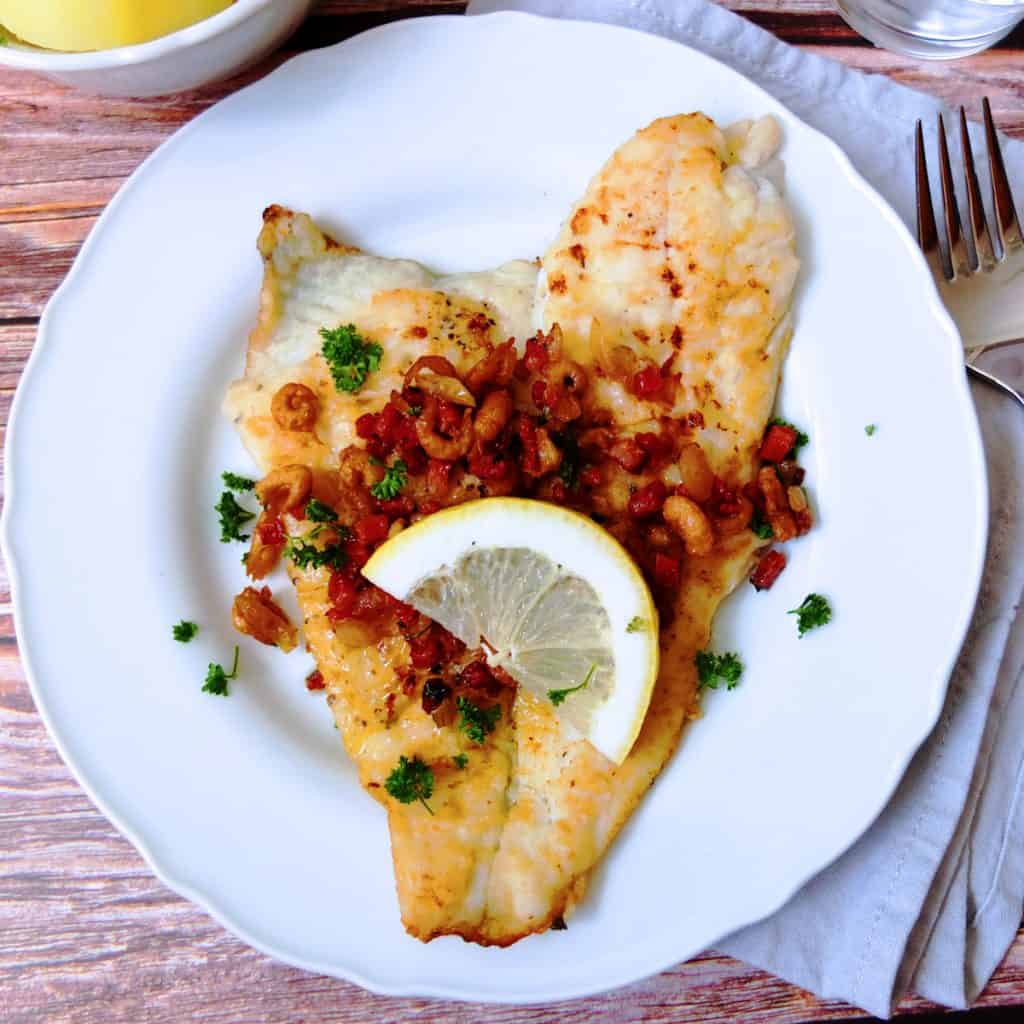
Origin of "Scholle Finkenwerder Art"
This plaice recipe originates from northern Germany. The dish is named after Finkenwerder, a peninsula in Hamburg that was once a small fishing village on the Elbe river. Fishermen there would bring in plaice fresh from the boat, and bacon, which kept well without refrigeration, became the natural partner for it in the pan.
Plaice in German is "Scholle." "Art" means "style" in English. So this dish translates as "Finkenwerder-style plaice."
You'll find the plaice pan-fried and served with crispy bacon and brown shrimp. It can also be prepared using a whole plaice, stuffed with bacon and shrimp, and then baked in the oven. A variation on "Scholle Finkenwerder Art" is "Scholle Büsumer Art," named after the coastal town of Büsum on the North Sea, where the plaice is served with brown shrimp only, no bacon.
Before we get cooking, it helps to know a little about the star of the dish
What is plaice?
Plaice is a flatfish that belongs to the flounder family. It lives on the seafloor and has a mottled brown top side to blend in with the sand below. Plaice is a popular fish in Germany thanks to its tender, white flesh and low fat content. You'll find it in the northeast Atlantic Ocean, as well as the North Sea and the Baltic Sea.
What does it taste like?
I always tell American friends that plaice tastes nothing like "fishy" fish. It has a mild, slightly sweet flavour with just a hint of umami, and the meat has a soft, delicate texture. That mildness is exactly why it pairs so well with bold flavours like bacon and brown shrimp.
Is it a lean or oily fish?
Plaice is a lean fish. Its fat content sits under 2%, which also makes it fairly low in calories.
What can I substitute for it?
You can substitute plaice with another flatfish, such as flounder, lemon sole, Dover sole, or dab.
Meet the Tiny Shrimp That Makes This Dish Sing
Brown shrimp are a small shellfish, similar in appearance to prawns but with a smaller, flatter body. They're greyish-brown raw but turn pink once cooked. You may also see them called crangon crangon, bay shrimp, or sand shrimp.
They're cooked while still alive, most often right on the fishing boats, so you'll typically find them already cooked and peeled at the fishmonger.
In Germany, brown shrimp are called "Nordseekrabben," a name that comes from their home in the North Sea. They're eaten in sandwiches, salads, or omelettes, and have a distinct salty taste that's noticeably stronger than the Asian shrimp variety many Americans are used to.
If you're in the US, true brown shrimp can be tricky to track down outside of specialty European grocers or online importers. Small cocktail shrimp or salad shrimp are the easiest swap, and I've noted that substitution in the recipe card below.
How to Pan-Fry Plaice Fillets
Frying plaice fillets is simple. All you need is a frying pan, some butter and oil, flour, and a bit of lemon juice.
Start by rinsing the plaice fillets and patting them dry, then season with salt and pepper. Squeeze over some fresh lemon juice before tossing the fish in flour. The flour coating does double duty: it helps the fillet hold together so the delicate, flaky texture doesn't fall apart in the pan, and it gives the fish a nice crispy outside.
Fry the fish in a mixture of oil and butter rather than butter alone. The oil raises the smoke point, so you can fry at a higher temperature without the butter burning.
Scholle Finkenwerder Art Recipe
Ingredients:
For the detailed instructions and exact measurements, please jump to the printable recipe card
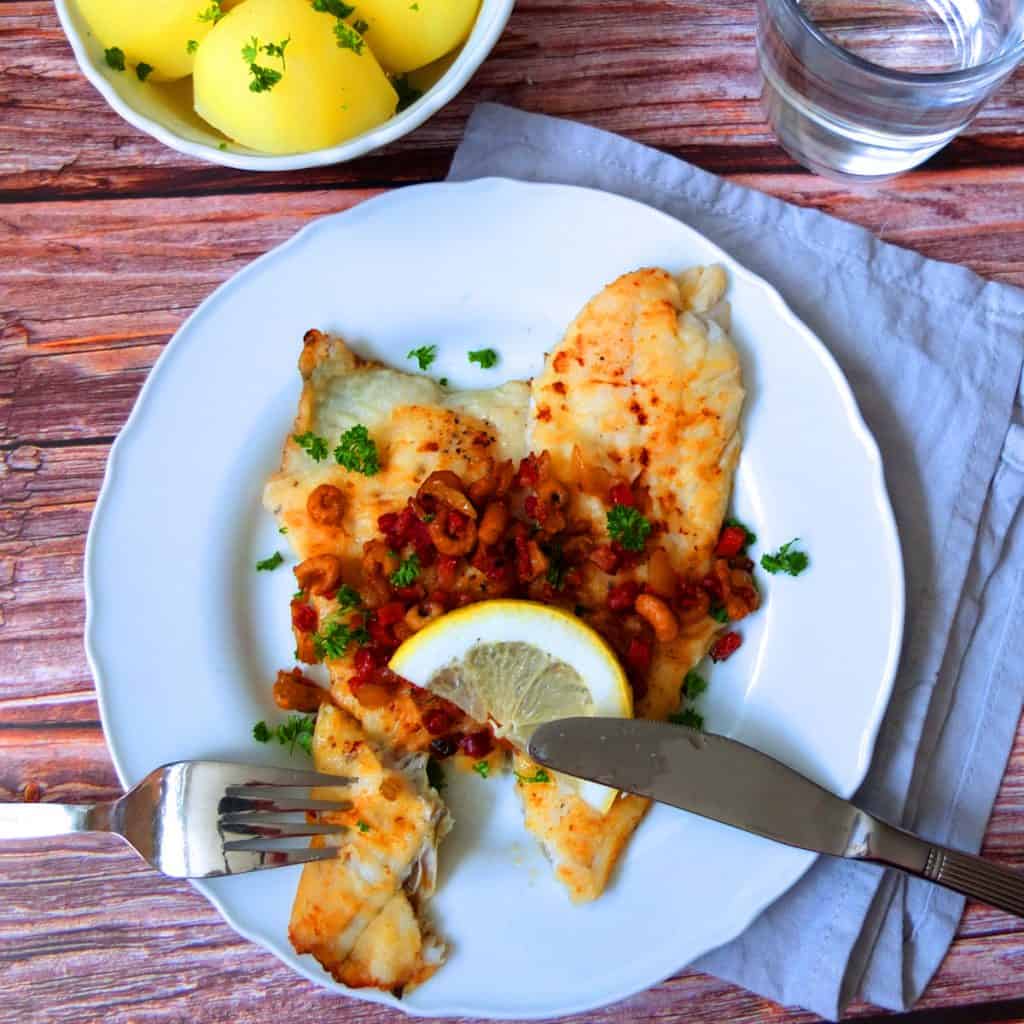
For this recipe, you'll need plaice fillets, brown shrimp, smoked bacon, onion, parsley, lemon, plain flour, and unsalted butter.
Recipe Steps
Want to save this recipe?
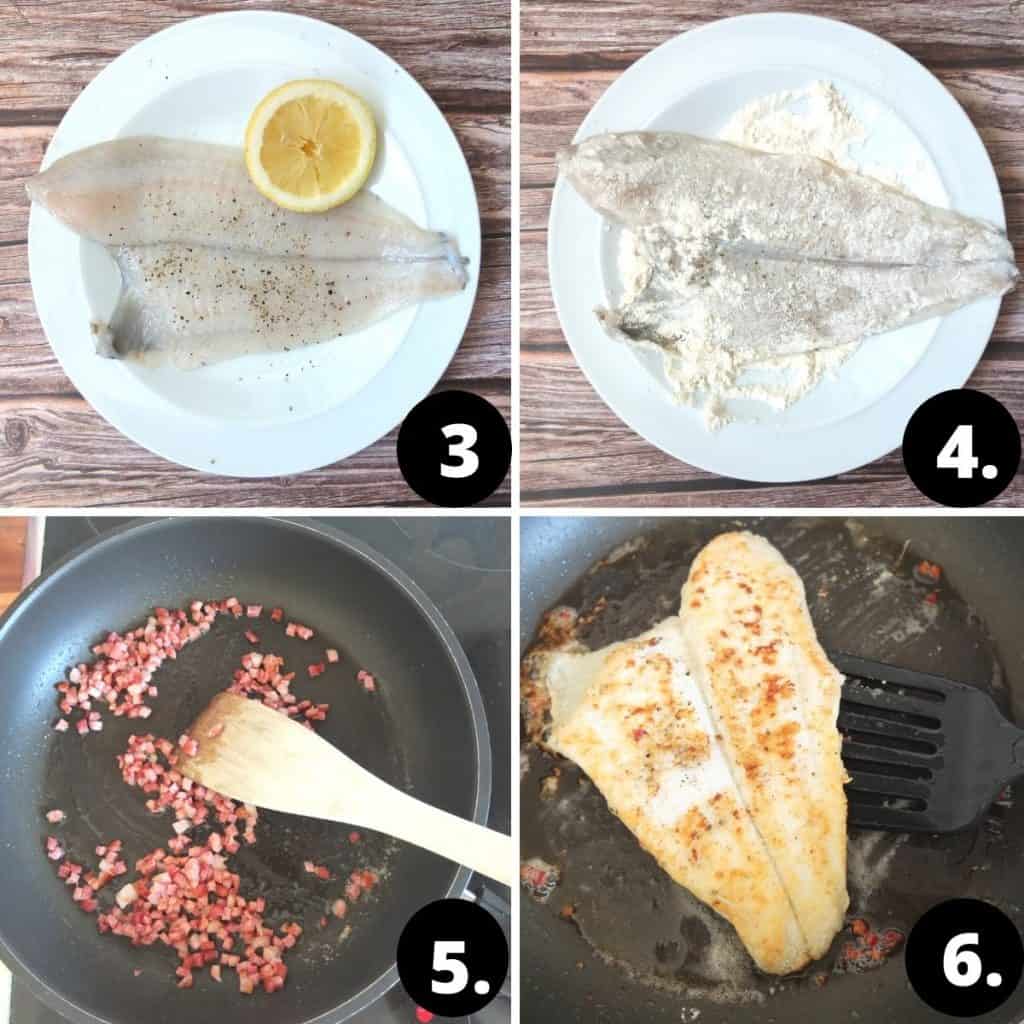
- Dice the bacon, pat the brown shrimp dry, and finely chop the onion and parsley.
- Pat the plaice dry, season with lemon juice, salt, and pepper, then toss in flour.
- Fry the bacon until crispy and set aside. Fry the plaice in butter and oil, 3-4 minutes per side, until golden, then keep warm.
- Warm the shrimp, onion, bacon, and parsley in the pan, melt in the butter, then spoon it all over the plated fillets.
What to serve with plaice?
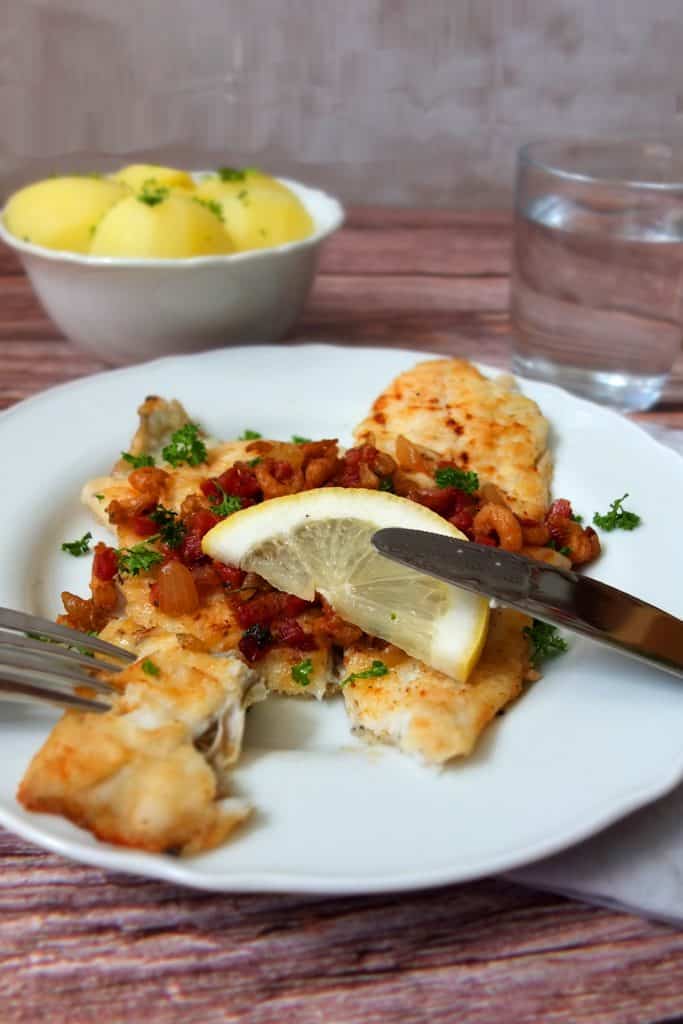
- Boiled potatoes
- Fried Potatoes (Bratkartoffeln)
- White Crusty Bread
- Rye Bread
- Green Salad
- German Potato Salad
Storage Instructions
Let any leftovers cool to room temperature before transferring them to the fridge, then eat within two days.
If you'd like to freeze it, let the fish chill in the fridge for about two hours first before moving it to the freezer. That short rest in the fridge helps the fish hold onto its flavour once frozen.
Have you made this recipe?

I'd love to hear how it turned out! Leave a rating and comment below.
You'll help fellow readers enjoy it too and help me spread the word about German cuisine. - Marita x
More Seafood Recipes
- Fischfrikadellen (German Fishcakes)
- Bremer (German Fish Sandwich)
- Pan fried Salmon with a Pomegranate Glaze
- Parmesan Crusted Cod
Recipe
Pan-fried Plaice with Brown Shrimp (Scholle Finkenwerder Art)
Equipment
- frying pan
Ingredients
- 1 tablespoon olive oil
- 1 cup (250 g) smoked bacon cubed
- ½ cup (75 g) brown shrimp
- ½ onion
- 2 tablespoon parsley
- 4 plaice fillets
- 1 lemon
- 4 tablespoon plain flour
- 1 tablespoon vegetable oil
- 4 tablespoon unsalted butter divided
Instructions
- Dice the bacon into small cubes. Pat the brown shrimp dry with a paper towel. Peel and finely dice the onion. Wash and finely chop the parsley.
- Wash the plaice fillets and pat dry with a paper towel. Spoon lemon juice over them and season with salt and pepper. Toss the fillets in the flour until coated.
- Heat a frying pan and fry the bacon until crispy. Remove from the pan and set aside.
- Add 1 tablespoon of the butter and the vegetable oil to the frying pan. On medium heat, fry the plaice for 3-4 minutes on each side. Remove from the pan and keep warm.
- Add the brown shrimp, onion, bacon, and parsley to the pan and warm slightly.
- Add the remaining 3 tablespoons of butter to the shrimp and bacon mixture and let it melt. Fry for about 1-2 minutes.
- To serve, place each fillet on a plate and spoon the brown-shrimp bacon butter over it.
Notes
Storage Instructions
Let any leftovers cool to room temperature before transferring them to the fridge. Consume within two days. If you'd like to freeze it, let the fish chill in the fridge for about two hours first before moving it to the freezer. This helps the fish hold onto its flavour once frozen.Want to save this recipe?
Nutrition
 Made this recipe?Drop a ⭐ rating and a quick comment below. I personally read and reply to every review!


Paul:-) says
Hi Marita,
The Brown Shrimp and smoked bacon butter is lovely. I added Parsley and Lemon Verbena to it before serving. Baby New Potatoes (with Lemon Verbena in the boiling water) and Tenderstem Broccoli and extra Butter. Heaven!
Now the confession:
I have been very much looking forward to this recipe so imagine my horror to find no flatfish at all at the fish counter. I used Haddock loins. Not quite the same but still very nice.
Marita Sinden says
Paul, that sounds gorgeous; love the lemon verbena touch! And no worries about the haddock; it's not quite the same as plaice since it's a different type of fish altogether, but sounds like it still worked out deliciously with that bacon butter. Heaven indeed
Freya says
Such a delicious and easy, classic recipe
Marita says
Thank you Freya.
Mihaela|https://theworldisanoyster.com/ says
I was a fan of German cooking even before I had access to your recipes. Still, since I discovered your blog, I found myself cooking and baking more often foods that remind me of home - Romania, and of the sweet German ladies' cooking and especially baking! I'm absolutely drooling over this recipe and fuming that I don't have this fish at home to make it this evening, but it is on the shopping list that's hanging on the fridge!:)
Marita says
Oh Mihaela, thanks so much for your kind words.
Jeri says
Mmmmm, I love seafood, and this looks amazing! I have never served it with bacon before, I will have to try it!
Marita says
Thanks hope you like it.
Kayla says
Yum! I love learning and eating food from all across cultures! I live in California and I had never heard of this before but it was delicious!
Marita says
Thanks Kayla I hope you get to try it.
Jeannie says
I think I can also pair it with rice, because it looks so good.
Marita says
I never had it with rice but I think it would go well.