

There's nothing quite like the anticipation of my Mom's Schweinebraten (pork loin roast), roasting in the oven, filling the whole house with that smell which means that you can't wait to sit down and eat. The tender meat is braised with dark beer, giving it a lovely malty hint, but it's really the gravy, made from those slow-roasted vegetables, that makes all the difference. And if I was lucky, my siblings wouldn't eat it all, so I might just have a slice left over for the most incredible pork loin sandwich the next day.
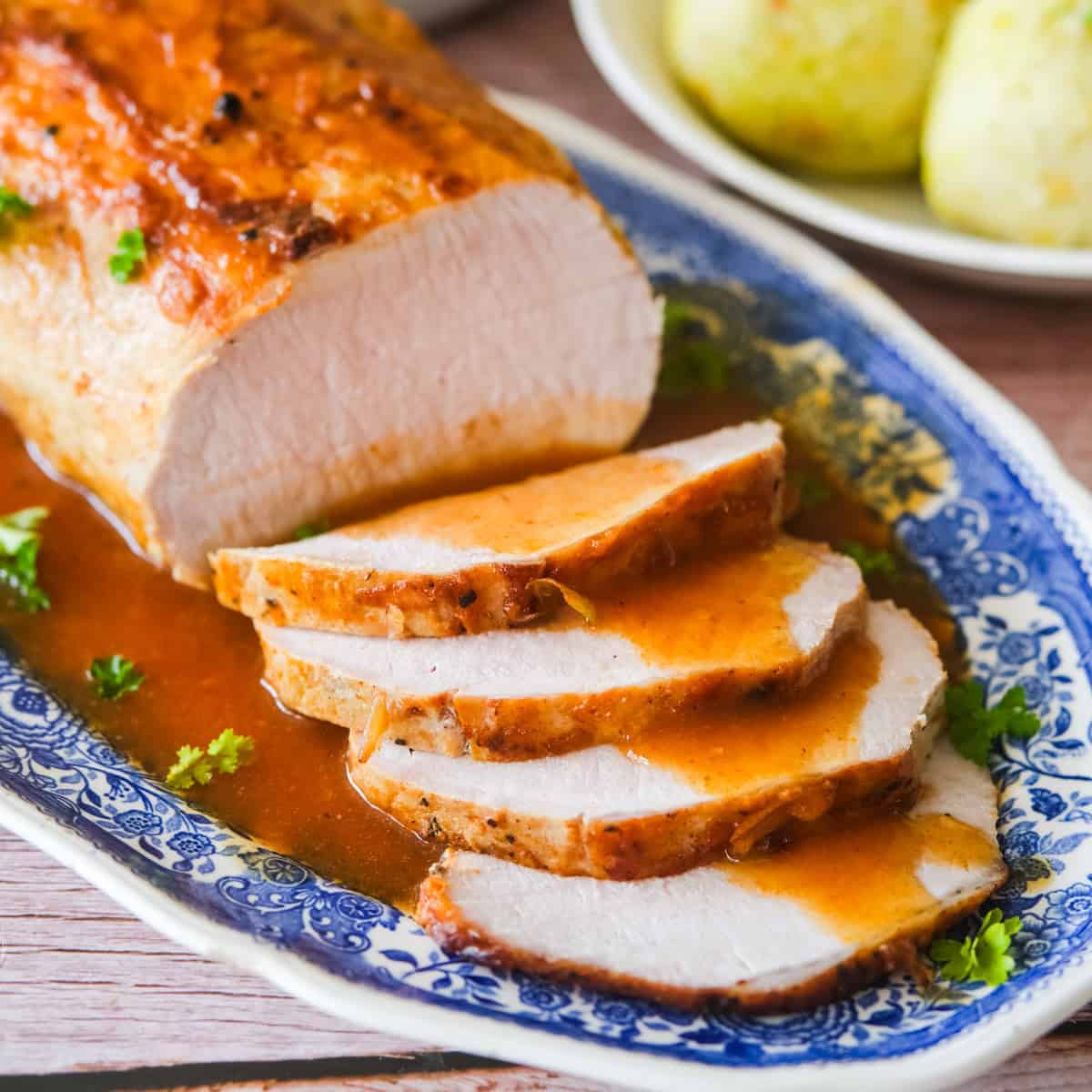
Let's recreate the recipe of my childhood. Memories of this oven-roasted pork loin served with Kartoffelknödel or Semmelknödel, (German potato or bread dumplings), plus a big helping of red cabbage make my mouth water. This is a moist, juicy German-style pork loin roast, not to be mistaken for the "Krustenbraten recipe," which has the crispy pork crackling on top.
Jump to:
What Is Schweinebraten?
Schweinebraten is simply the German word for pork roast, and if you're looking for a roast loin of pork recipe with real German flavor, this is it. It's popular everywhere in Germany, though it's especially traditional in Bavaria and Austria. The name covers a whole range of cuts, from a leaner pork loin, like the one in this recipe, to shoulder, belly, neck, or ham. When the roast is made with the skin left on for that crispy, crackling top, it's usually called a Krustenbraten instead.
Ingredients You'll Need
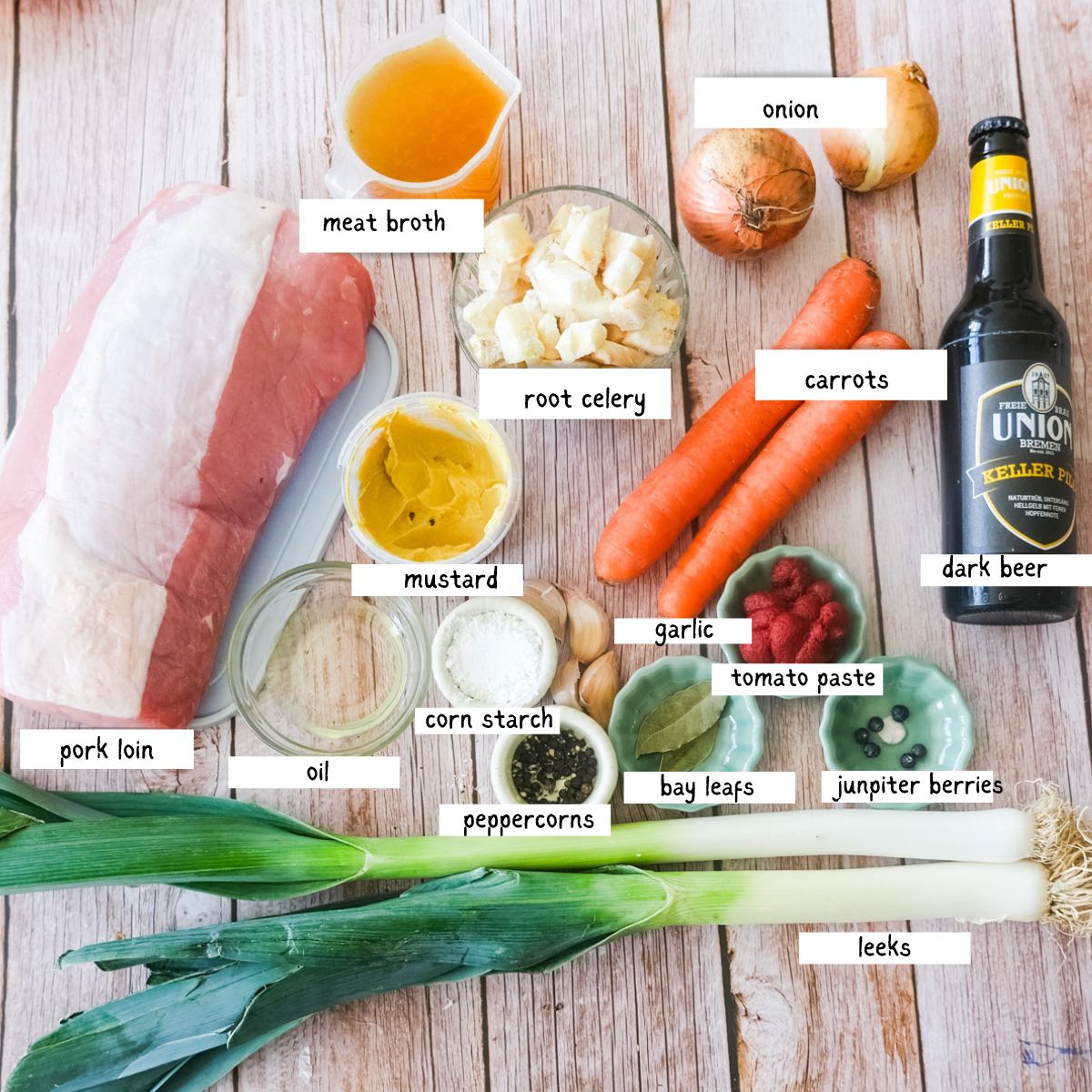
For the detailed instructions and exact measurements, please jump to the printable recipe card
Which Cut of Pork to Use
For this recipe, I tend to decide between two different parts of the pig. They shouldn't be too fatty, but on the other hand, not too lean either, or the roast ends up dry.
- Pork loin is the leaner of the two, and what I use most often for this recipe. This is the same cut pork chops are sliced from, just left whole instead of cut into individual chops, so ask your butcher for a skinless pork loin joint or roast. It's not the same as pork tenderloin (sometimes called fillet), which is a smaller, more delicate muscle nearby that cooks much faster and would dry out if you tried to use it here.
- Schweinekamm, or pork neck (sometimes called pork collar), is a little fattier than the loin.
Seasoning for Pork Loin Roast
The best seasonings for pork loin roast keep things simple. Salt, whole peppercorns, mustard (affiliate link), caraway seeds, bay leaves, and juniper berries (affiliate link) are all you need to bring out that classic German flavor. A few good herbs and spices for pork loin roast go a long way here, and mustard (affiliate link) rubbed on before searing helps the seasoning really stick.
The Vegetables & Sauce Base
A good pork loin roast recipe always starts with a solid base of aromatics. Leeks, onions, garlic, carrots, and celery root all go into the pot together. They flavour the meat but also provide the sauce base for later. A spoonful of tomato paste rounds everything out and gives the sauce its deep color. Beef broth and a splash of dark beer make up the braising liquid, and they're the secret to a really good pork loin roast with gravy.
How to Make German Pork Loin Roast

Step One: Let your pork loin come to room temperature, then season it with salt and coat it generously in mustard (affiliate link). This helps the seasoning stick and sets you up for a really good sear.

Step 2: Using an oven-proof pot, sear the pork loin in hot oil until deeply browned on all sides. This step builds a ton of flavor, so give it a few minutes on each side rather than rushing it.

Step 3: Remove the meat, then cook the onions, leeks, carrots, celery root, and garlic in the same pot, right in with all those flavorful bits left behind. Stir in the tomato paste, then deglaze with a splash of broth, scraping up the browned bits from the bottom.
Step 4: Return the pork to the pot, add the bay leaves, juniper berries (affiliate link), and remaining broth, then roast uncovered, basting occasionally with the dark beer. For my 1 kg (2.2 lb) roast, this took about 60 minutes, but cooking time really depends on the size and thickness of your cut, so it is better to rely on a meat thermometer rather than the clock. Check the internal temperature; you're looking for 65°C (150°F) for juicy, tender meat. Once it's there, rest the meat for 15 minutes before slicing.

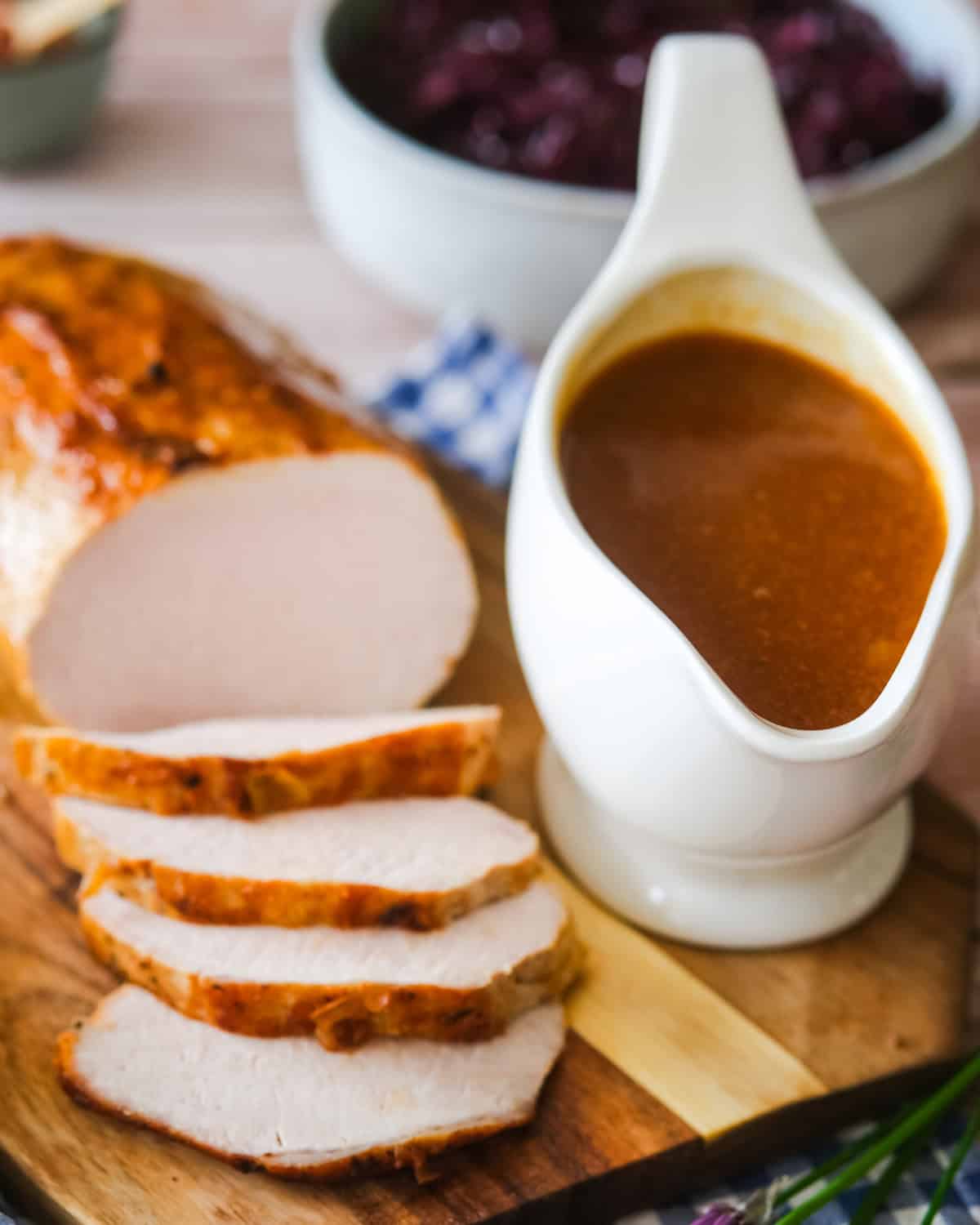
Step 5: Strain the braising liquid, bring it to a boil, then whisk in the cornstarch slurry until it thickens into a rich pork loin roast gravy. Taste and adjust the seasoning before serving over the sliced pork.
Want to save this recipe?
Recipe Variations
Schweinebraten looks a little different in every German kitchen, and I love that about it. Here are a few ways I sometimes switch things up.
Try a Different Cut of Meat!
If you can't find pork loin, or you just want something a little richer, pork neck (Schweinenacken) is my go-to swap. It's a bit fattier than loin, so it's actually more forgiving if you leave it in the oven a touch too long.
Find Your Favorite Seasoning!
- Caraway seeds and marjoram (affiliate link) are a classic Bavarian seasoning combination
- Try flavoring the braising liquid by adding a bay leaf or allspice
- Use garlic and rosemary if you want a garlic-roasted pork loin with a white wine and mushroom cream sauce instead of the classic beer gravy
- A fruit glaze, brushed on near the end for a bit of natural sweetness and caramelization
- You can leave out the beer entirely and replace it with more beef broth
Pick Your Cooking Method!
- Braised low and slow in a Dutch oven, uncovered, basting every so often; this is exactly how I make my slow-roasted pork loin
- You can also cook it fully on the stovetop, no oven needed at all if you'd rather not heat the kitchen up
- Want to roast pork loin in the crock pot instead? Sear the meat first for flavor, then add everything to your slow cooker (affiliate link) and cook on low heat for 6 to 8 hours; such an easy hands-off option if you're busy during the day
What to Serve with This German Pork Loin Roast

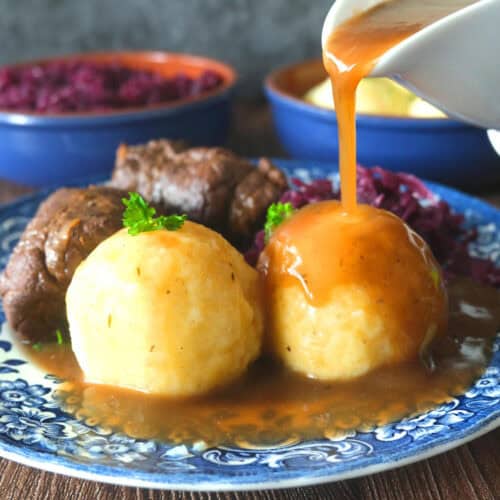
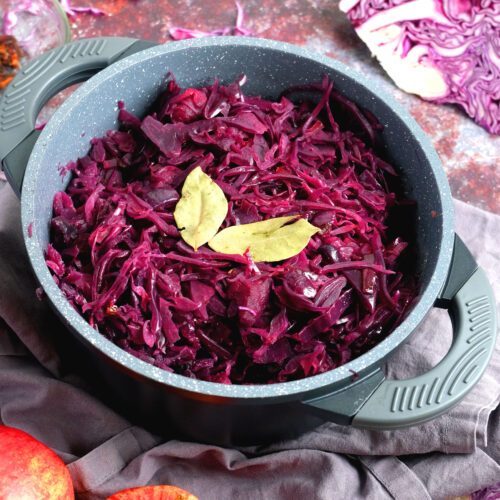
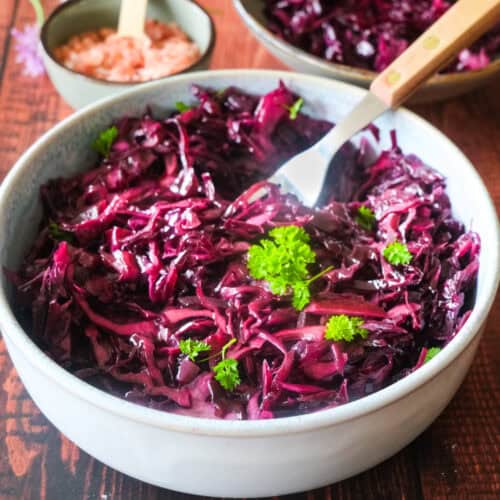
Wondering what to serve with pork loin roast? I love it with bread dumplings (Semmelknödel) because they're perfect for soaking up all that yummy gravy. Kartoffelknödel (potato dumplings) or boiled and mashed potatoes are also traditional choices. A big helping of red cabbage is another must. In the photos, I actually served mine with my red cabbage salad, kind of like a purple coleslaw, if you want something a little fresher and quicker to put together.
If you want to have the full traditional experience, roasted pork loin and sauerkraut is a classic pairing as well, the tangy sauerkraut cuts right through the richness of the roast. For something a little simpler, one of my German potato salad recipes works great as an easy pork loin roast sidedish if you're short on time.

Storage and Freezer Tips
Got extra pork loin roast? Lucky you! It keeps great in the fridge for up to 4 days; just store it in an airtight container (keep the gravy separate so the meat doesn't get soggy).
To freeze, slice the meat first, wrap it well, and it'll keep for up to 3 months. The gravy freezes just as easily in its own container.
To reheat, warm slices gently in a skillet with a little gravy or broth so they don't dry out, or microwave covered in a pinch of water.
Got leftover roast pork loin? Don't let it go to waste. I like to serve mine cold, sliced up for sandwiches. And don't skimp on the mustard (affiliate link)!
Have you made this recipe?

I'd love to hear how it turned out! Leave a rating and comment below.
You'll help fellow readers enjoy it too and help me spread the word about German cuisine. - Marita x
Recipe

German Pork Loin Roast (Schweinebraten)
Ingredients
For the Pork
- 1 kg pork loin, or neck without bones Pork loin note: this is the same cut pork chops come from, just left whole. Ask your butcher for a skinless pork loin joint or pork loin roast, not tenderloin or fillet, which is a different, smaller cut that cooks much faster.
- 3 teaspoon salt
- freshly ground pepper to taste
- 2 tablespoon mustard or dijon mustard (affiliate link) will do
- 2 tablespoon neutral oil
For the vegetables
- 1 stalk leek about 150g/ 5 oz
- 2 carrots
- 2 onions
- 150 g root celery cubed, (Tip: I buy a whole bulb and freeze it in cubes for other recipes too)
- 4 cloves garlic
Seasonings
- 2 tablespoon tomato paste
- 5 juniper berries crushed
- 1 teaspoon whole peppercorns
- 500 ml beef broth
- 2 bay leaves
- 1 teaspoon carraway seeds optional
- 1 tablespoon cornstarch optional to thicken the sauce
- 250 ml dark beer this is what makes it malty (1 cup)
Instructions
Prep the Meat and Vegetables
- Take the meat out of the fridge at least an hour before cooking so it can come up to room temperature. This might feel like an extra step you can skip, but it really does matter here. Cold meat straight from the fridge will drop the temperature of your oil and pan the moment it hits the heat, so instead of getting a nice sear, the meat starts steaming and losing its juices. Warmer meat sears faster and more evenly, which means a juicier roast in the end.1 kg pork loin, or neck without bones
- While the meat warms up, prep your vegetables. Roughly peel and chop the leek, carrots, onions, and celery root. Peel the garlic cloves but leave them whole. Give your juniper berries (affiliate link) a good crush too. Using the flat side of a knife or a rolling pin (affiliate link) works well, as this cracks them open so their flavor can actually come through in the sauce.1 stalk leek, 2 carrots , 2 onions, 150 g root celery , 4 cloves garlic
- Preheat your oven to 180°C (350°F).
- Season the pork loin with salt and freshly ground pepper, then coat it generously all over with the mustard (affiliate link).
Sear the Pork
- Heat half the oil in a large, oven-safe pot over high heat. Once it's nice and hot, add the meat and sear it until deeply browned on all sides, turning as needed. This is where a lot of the flavor comes from, so don't rush it; give each side a proper few minutes. Once it's nicely seared all over, remove the meat and set it aside.2 tbsp neutral oil
Build the Sauce Base
- Add the remaining oil to the same pot along with the onion, leeks, carrots, celery root, garlic cloves, and peppercorns. Cook for about 5 minutes, stirring occasionally, until the vegetables start to soften. Stir in the tomato paste and let it cook for about a minute; this deepens the flavor and gives the sauce a rich color later on. Deglaze with a splash of the broth, scraping up any browned bits stuck to the bottom of the pot - that's pure flavor you don't want to leave behind.500 ml beef broth, 2 tbsp tomato paste
Roast the Pork Loin
- Return the pork to the pot. Add the bay leaves, crushed juniper berries (affiliate link), and caraway seeds if using, then pour in the remaining broth. Place the pot in the oven, uncovered, and roast for about 60 minutes, basting with a little of the dark beer every 20 minutes. Cooking time really depends on the size and thickness of your cut, so it is best to use a meat thermometer rather than the clock.5 juniper berries (affiliate link), 1 tsp whole peppercorns , 2 bay leaves, 1 tsp carraway seeds , 250 ml dark beer
- The pork loin is done when it reaches an internal temperature of 65°C (150°F). Use a meat thermometer for this one, it's a lean cut and can dry out fast if it goes past that mark. Once it's there, transfer the meat to a platter, cover loosely with foil, and let it rest for 15 minutes. This lets the juices settle back into the meat instead of running out the moment you slice it.
Make the Gravy
- While the meat rests, make the sauce. Strain the vegetables and broth through a sieve, you can discard the vegetables once they've given up their flavor.
- Pour the strained liquid into a saucepan and bring to a boil over medium heat. Taste and adjust with salt and pepper. If the beer gives it a slightly bitter edge, a small pinch of sugar will smooth that out.
- For a thicker sauce, whisk the cornstarch with 1 tablespoon of cold water until smooth, then stir it into the boiling sauce until it thickens to your liking.1 tbsp cornstarch
Serve
- Slice the meat into rounds and serve with the sauce spooned over the top.
Want to save this recipe?
 Made this recipe?Drop a ⭐ rating and a quick comment below. I personally read and reply to every review!



Mary says
Hi! I do not have celery root available nearby. Do you have a suggested substitute? Thanks!
Marita Sinden says
Hi Mary, you can swap the celery root for celery stalks or a parsnip. Use 2 to 3 celery stalks or 1 parsnip in place of the 150 g (about 5 oz) celery root. It's mostly there for flavor in the gravy base, so either one works. Enjoy!
June LaPierre says
This was the best pork loin recipe!! My family absolutely loved it! From the aromatic vegetables to the fabulous sauce, our meal was wonderful.
Thank you Marita.
❤️
Marita Sinden says
Thank you June! That made my day! I am glad you and your family liked it.